
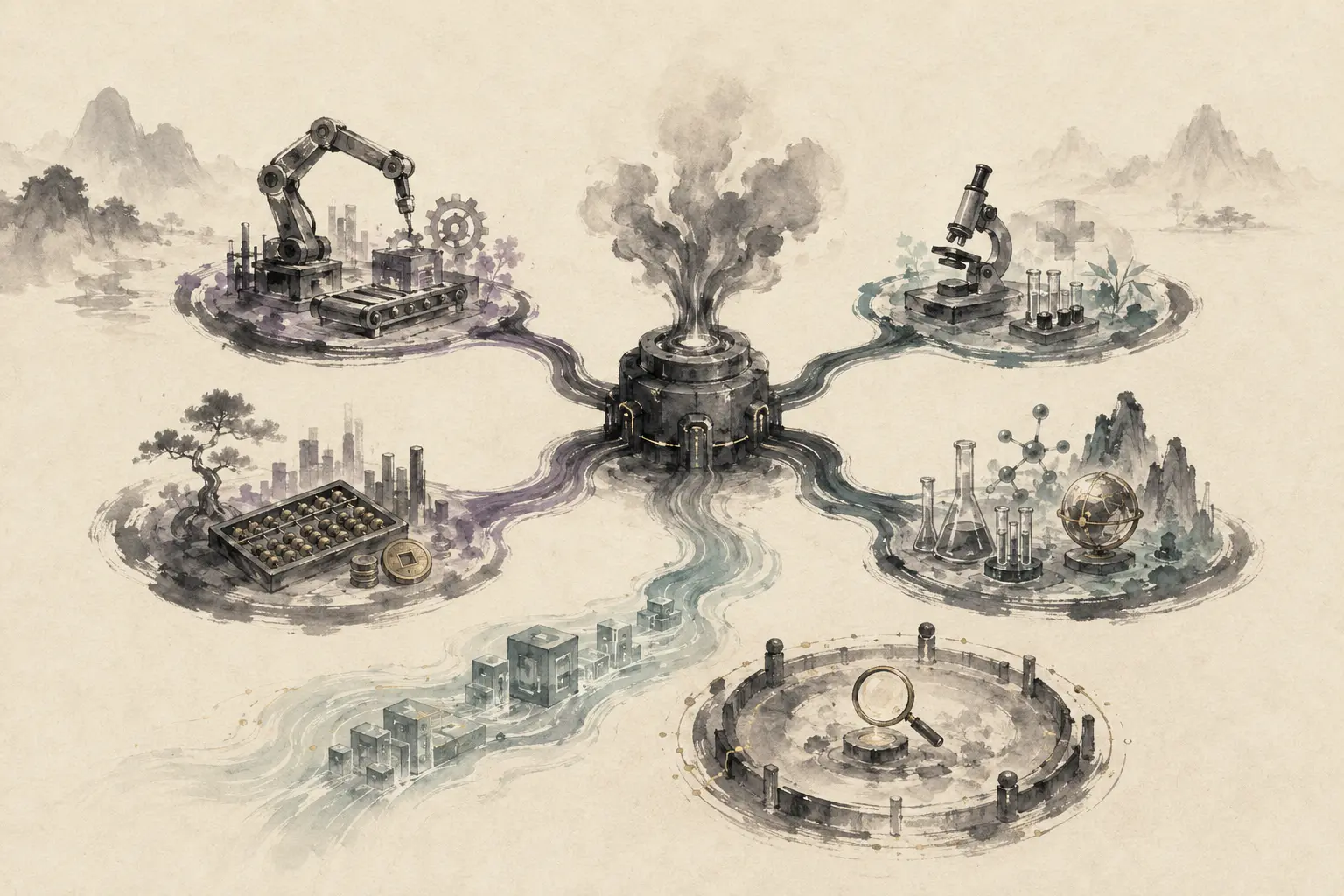
Modern ink-wash abstract foundation model branching into industry tools and smaller specialist models

INFORMATION ASYMMETRY 29 · AI STACK · 04 AI MODELS

基础模型、行业模型、微调、检索增强与模型部署

A Bigger AI Model Is Not Automatically Better

Separates foundation, general and industry models, pretraining, tuning, retrieval, agents, evaluation and deployment through data, task, cost and accountability.

Cross-checked against Chinese primary, industry, research and media sources · August 3, 2026 · Currency basis: the latest CFETS rate available on August 3, 2026—USD/CNY 6.7894, published July 31, 2026 · monetary amounts shown only in U.S. dollars
Topic typeKnowledge × software

EDITORIAL THESIS

Core proposition

  1. 01

    A model's business value is determined not by parameter count but by accuracy, latency, cost, security and accountable operation on a specific task.

Swipe sideways for detail; tap the graphic to open it full size.

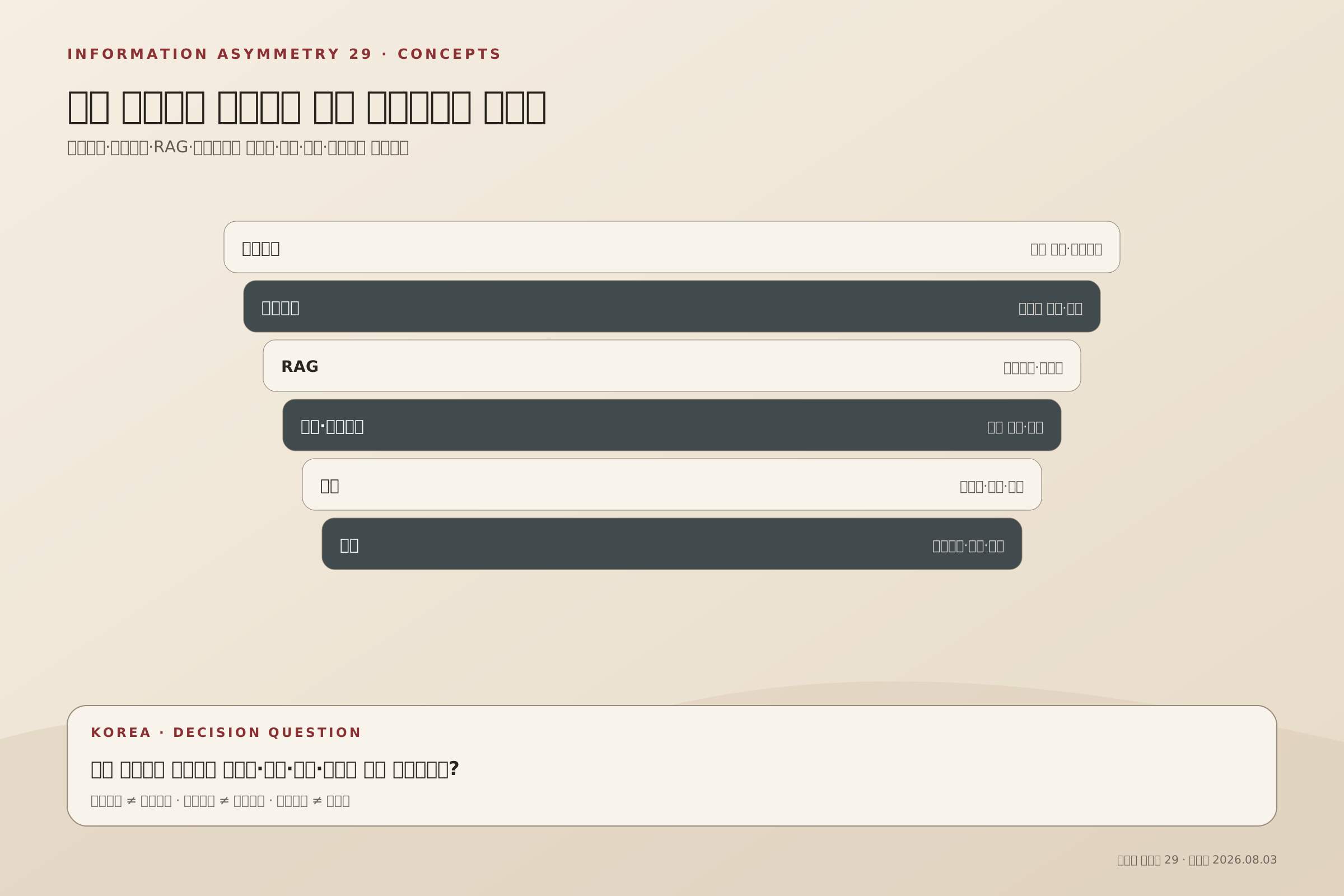
Infographic of the concept, operating structure, constraints and Korean response for A Bigger AI Model Is Not Automatically Better
29 · Operating structure — A Bigger AI Model Is Not Automatically BetterA Korean-language graphic summarizing the concept, China’s operating system, constraints and Korea’s decision question.Download high-resolution SVG

CHINA SYSTEM · OPERATING LOGIC

Read the concept through its operating structure

01

Foundation, general and industry models differ by use

Foundation models provide broad capabilities; general models serve many tasks; industry models target specific knowledge, rules and workflows. A tool-wrapped model is not automatically a validated industry model.

02

Pretraining, tuning and retrieval are different investments

Pretraining builds capability, tuning changes behavior and retrieval injects external knowledge. Prompts, parameter-efficient tuning and full tuning differ in cost and risk.

03

Task evaluation matters more than leaderboards

Public benchmarks can suffer contamination and task mismatch. Enterprises need evaluations covering answers, prohibited behavior, citations, permissions, tool actions and recovery.

04

China advances models with industrial deployment

China's AI+ manufacturing action targets 3–5 manufacturing general models, broad industry-model coverage, 1,000 industrial agents and 100 quality datasets by 2027. Targets are not results.

05

Korea should buy controllable outcomes, not model ownership alone

Korean firms should choose build, API, open weights or private deployment by sensitivity, latency, cost, lock-in and update duties, contracting data use, logs, changes, evaluation, incidents, IP and exit.

FIELD CHECK · BEFORE DECISION

Questions to verify before applying this concept

  1. 01

    Were training, tuning and retrieval verified beyond labels?

  2. 02

    Is there task evaluation and a critical-error ceiling?

  3. 03

    Are accuracy, latency, cost and human review measured?

  4. 04

    Are data, logs, updates and exit duties contracted?

Primary, industry, research and media sources

The Korean primary report cross-checks Chinese official texts with industry, research and media evidence.

01Official基础模型官方释义02Official政务领域人工智能大模型部署应用指引03Official人工智能赋能制造业高质量发展行动方案
Back to Information Asymmetry