

Modern ink-wash hierarchy of legal texts, policy files and planning blueprints

INFORMATION ASYMMETRY 11 · POLICY · HOW TO READ DOCUMENTS

法律、行政法规、部门规章与政策文件

How Much Force Do ‘Opinions’ and ‘Notices’ Carry?

Distinguish laws, administrative regulations, ministry rules, normative documents, plans, opinions, notices and action plans by issuer, legal basis, scope and enforcement—not by title alone.

Cross-checked against Chinese primary, industry, research and media sources · August 3, 2026 · Currency basis: the latest CFETS rate available on August 3, 2026—USD/CNY 6.7894, published July 31, 2026 · monetary amounts shown only in U.S. dollars
Topic typePolicy-led × regulatory-risk

EDITORIAL THESIS

Core proposition

  1. 01

    The force of a Chinese policy document comes from authority, superior-law basis, scope, procedure and enforcement instruments—not the words ‘opinion’, ‘notice’ or ‘plan’.

Swipe sideways for detail; tap the graphic to open it full size.

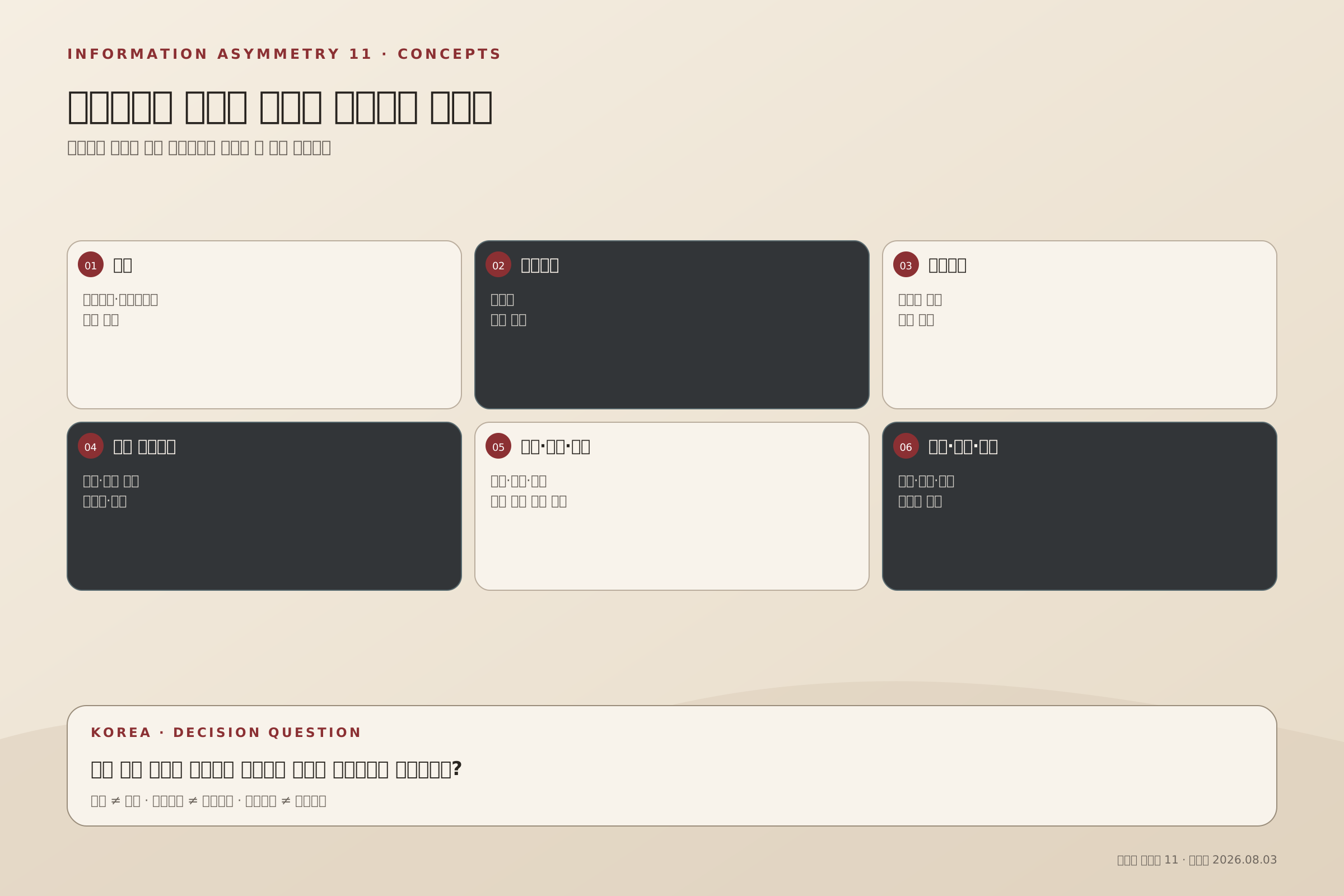
Infographic of the concept, operating structure, constraints and Korean response for How Much Force Do ‘Opinions’ and ‘Notices’ Carry?
11 · Operating structure — How Much Force Do ‘Opinions’ and ‘Notices’ Carry?A Korean-language graphic summarizing the concept, China’s operating system, constraints and Korea’s decision question.Download high-resolution SVG

CHINA SYSTEM · OPERATING LOGIC

Read the concept through its operating structure

01

Start with legal rank, not the title

Laws, State Council regulations, ministry rules, local regulations and local government rules have different issuers and scopes. Ministry rules must implement superior authority; their titles alone do not establish legal force.

02

Normative documents differ from internal working papers

Administrative normative documents have external, repeatable application to unspecified parties. Meeting minutes, internal systems and personnel papers generally do not. Businesses should verify legality review, filing, validity and repeal.

03

Read plans and opinions through their execution chain

Plans set direction, opinions state principles, notices transmit requirements and action plans allocate tasks. None automatically creates a subsidy entitlement; budgets, rules, applications, review, publication and disbursement complete the chain.

04

Separate announcement from implementation

Publication, effective date, application window, review date, qualification period and disbursement are distinct. Central direction must be traced into local rules, budgets, responsible agencies, lists and payment evidence.

05

Korea should translate function, not labels

Korean institutions should present issuer, document number, dates, scope, legal effect and downstream execution together. Policy language cannot replace certificates, payment records, procurement contracts or revenue evidence.

FIELD CHECK · BEFORE DECISION

Questions to verify before applying this concept

  1. 01

    Who issued it and under what superior authority?

  2. 02

    To whom, where and for how long does it apply?

  3. 03

    Did budgets, rules, applications, publication and execution follow?

  4. 04

    Are announcement, eligibility, contract, payment and outcome separated?

Primary, industry, research and media sources

The Korean primary report cross-checks Chinese official texts with industry, research and media evidence.

01Official中华人民共和国立法法02Official政策解读:法律、法规、规章与规范性文件03Official行政规范性文件的属性和治理
Back to Information Asymmetry