
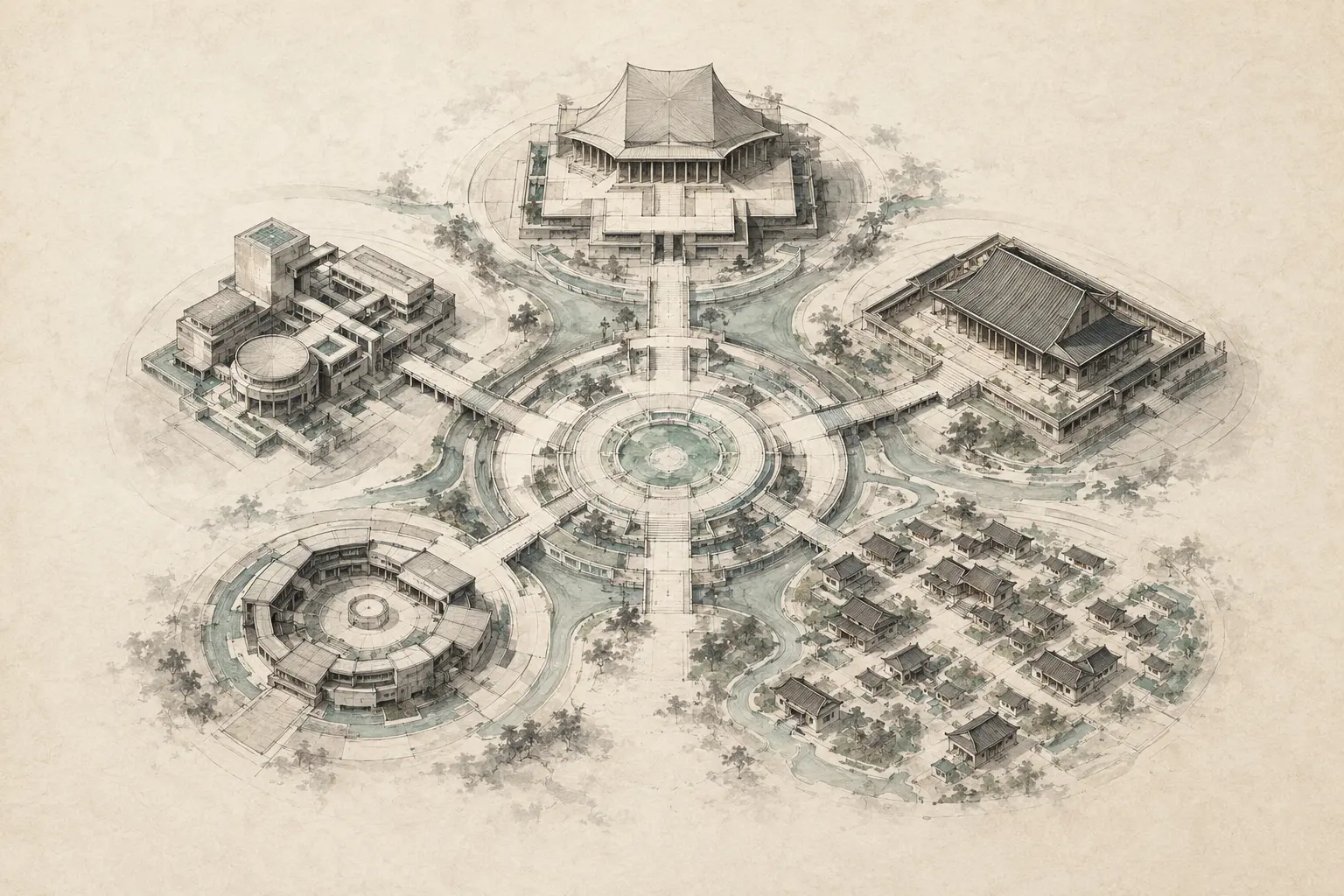
Modern ink-wash institutional city with distinct chambers connected around a civic axis

INFORMATION ASYMMETRY 13 · INSTITUTION · WHO GOVERNS

党、全国人大、国务院、部委与地方政府

Who Decides and Who Implements Policy in China?

Separates Party direction, National People’s Congress legislation and budgets, State Council and ministry administration, and local project implementation.

Cross-checked against Chinese primary, industry, research and media sources · August 3, 2026 · Currency basis: the latest CFETS rate available on August 3, 2026—USD/CNY 6.7894, published July 31, 2026 · monetary amounts shown only in U.S. dollars
Topic typePolicy-led × institutional-identification

EDITORIAL THESIS

Core proposition

  1. 01

    Saying ‘the government decided’ is too broad: political direction, law and budget, administrative rules, industrial execution and local projects move through different institutions and procedures.

Swipe sideways for detail; tap the graphic to open it full size.

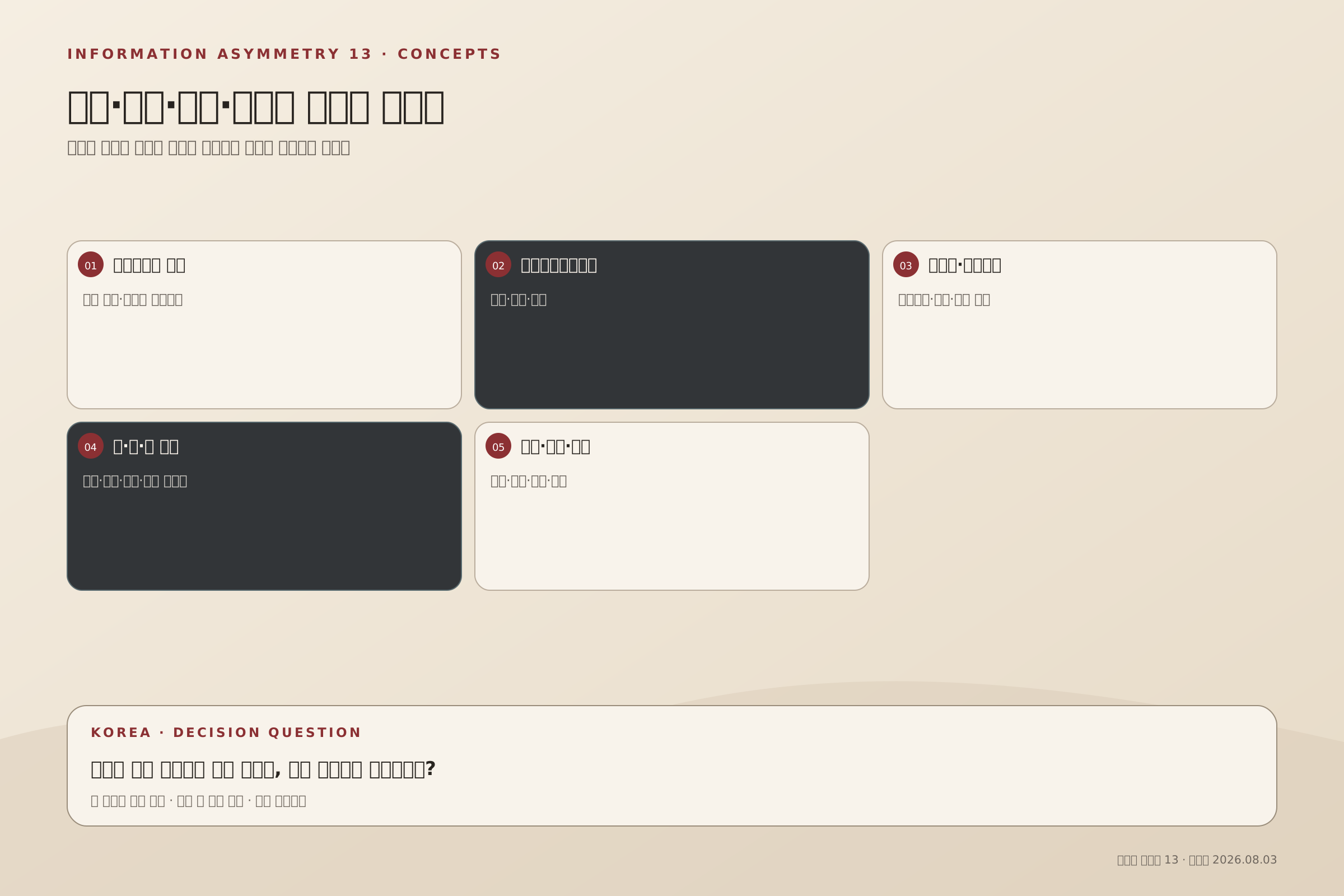
Infographic of the concept, operating structure, constraints and Korean response for Who Decides and Who Implements Policy in China?
13 · Operating structure — Who Decides and Who Implements Policy in China?A Korean-language graphic summarizing the concept, China’s operating system, constraints and Korea’s decision question.Download high-resolution SVG

CHINA SYSTEM · OPERATING LOGIC

Read the concept through its operating structure

01

The Party sets direction and organizational coherence

The Party Center sets major strategy and institutional reform. Its political and strategic documents should not be conflated with State Council or ministry administrative instruments or with legal contracting entities.

02

The NPC handles law, budgets and state organs

The NPC and its Standing Committee legislate, review development plans and budgets and decide state-organ matters. Implementation still requires State Council, ministry and local instruments and projects.

03

The State Council and ministries have distinct mandates

The State Council organizes national administration while departments act within statutory mandates. Joint documents still require separating lead, supporting, approving, funding and supervisory bodies.

04

Local government turns policy into land, budgets and projects

Provincial, city and county governments turn central direction into plans, parks, funds, permits, talent, procurement and scenarios. Results vary with local fiscal and industrial capacity.

05

Cooperation starts with authority and the contracting entity

Korean counterparts should verify official Chinese names, administrative level, legal nature, signing authority and budget basis, then allocate approval, payment, land, data, customer access and performance responsibility in contracts.

FIELD CHECK · BEFORE DECISION

Questions to verify before applying this concept

  1. 01

    Is this political direction, law or administration?

  2. 02

    Who leads, supports, approves, funds and supervises?

  3. 03

    At which level does actual authority sit?

  4. 04

    Do the signer and entity control budget and performance?

Primary, industry, research and media sources

The Korean primary report cross-checks Chinese official texts with industry, research and media evidence.

01Official中共中央、国务院印发党和国家机构改革方案02Official国务院关于机构设置的通知03Official关于国务院机构改革方案的说明04Official国务院组织法修订说明
Back to Information Asymmetry