INFORMATION · CHINA SME POLICY
China’s Tiered Development System for Quality SMEs
China identifies a broad base of technology- and innovation-oriented SMEs, then develops stronger firms toward Specialized SMEs and national-level Little Giants according to niche-market strength and supply-chain criticality.
Based on the Measures effective April 1, 2026 · Fully re-audited August 4, 2026 · Currency converted at USD 1 = CNY 6.7898 on August 3
Topic typePolicy-led × supply-chain
EDITORIAL THESIS
Core propositions
- 01
China's SME labels form a tiered policy system, not a single certification.
- 02
A label does not guarantee technology or delivery; issuer, validity, cohort and outcomes still require verification.
- 03
Korea should use Chinese qualifications as a screening signal, not a conclusion of trust.
Swipe sideways for detail; tap the graphic to open it full size.
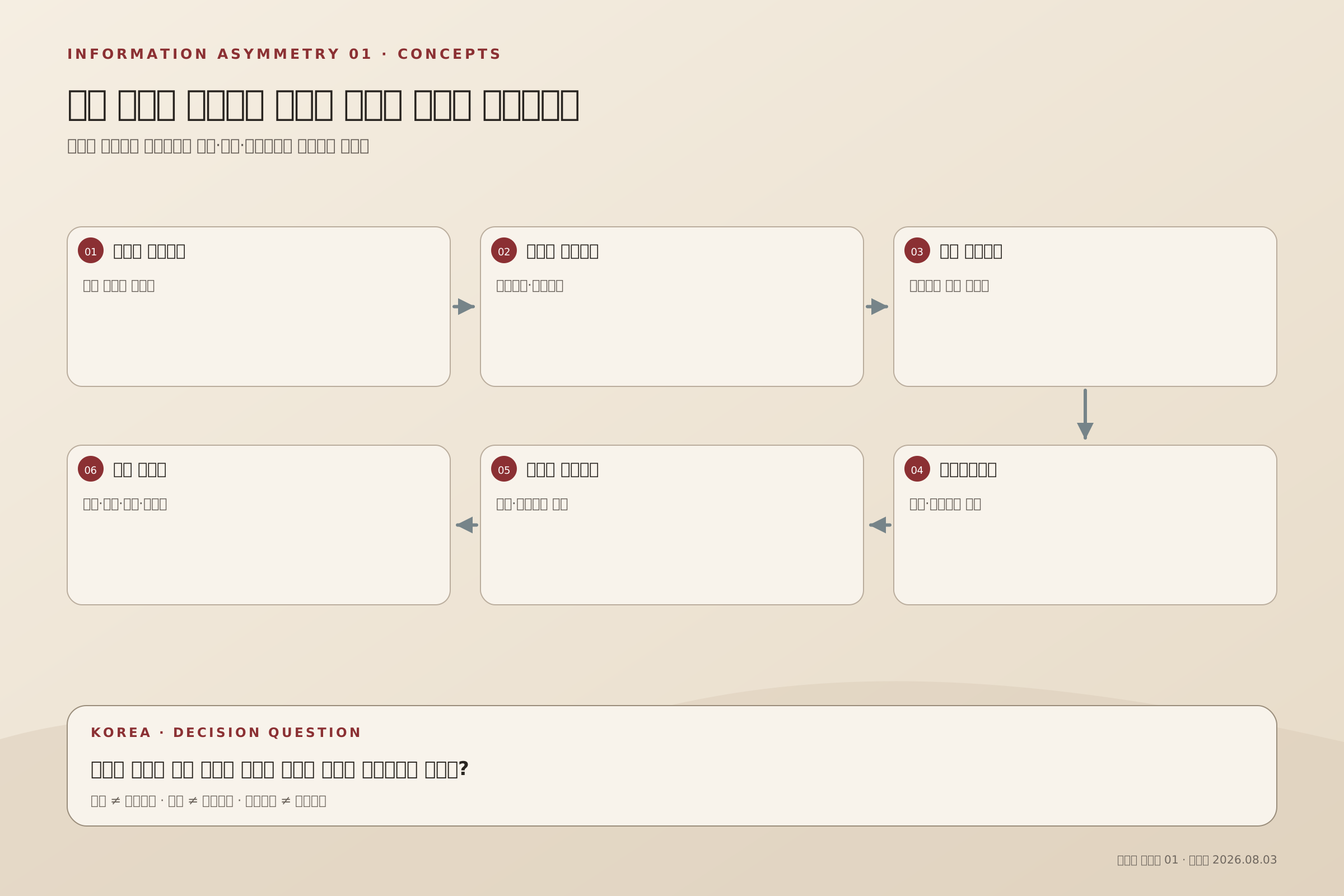
THE POLICY LADDER · 梯度培育
Two parallel foundations lead toSpecialized SMEs and Little Giants.
Technology-oriented and innovation-oriented SMEs are parallel foundation groups, not consecutive tiers. Either may apply for Specialized SME status; accredited Specialized SMEs may then apply for national Little Giant status.
Parallel foundation groups科技型中小企业Technology-oriented SMEs 创新型中小企业Innovation-oriented SMEs
Application and accreditation→FOUR LEVELS · THE SYSTEM
The selection logic and industrial rolematter more than the label.
Technology-oriented SMEs
科技型中小企业A broad evaluation and registry for SMEs with R&D personnel, R&D spending and intellectual property that commercialize scientific or technological results.
- Administration
- Companies self-evaluate and local agencies review them. Since 2026, the process runs through MIIT’s high-quality SME platform in coordination with science and technology authorities.
- Core criteria
- Generally no more than 500 employees and no more than USD 29.46 million in annual revenue or assets (original threshold: CNY 200 million); a score of at least 60 is required and the scientific-personnel score cannot be zero. Valid High and New Technology Enterprise status and other top-tier credentials can provide a fast track.
- Korean reference
- The closest Korean references are the R&D type under the venture-company confirmation system and parts of the technology-innovative SME framework. Their legal effects are not equivalent.
- Caution
- This is separate from China’s High and New Technology Enterprise qualification, which is directly tied to corporate-income-tax treatment.
Innovation-oriented SMEs
创新型中小企业A foundation group for SMEs with stronger innovation, growth and specialization, operating in parallel with technology-oriented SMEs.
- Administration
- Companies apply voluntarily by location; provincial SME authorities evaluate and announce successful applicants and manage updates and reviews.
- Core criteria
- During the current transition, evaluation covers innovation, growth and specialization, with a total score of at least 60. Major science awards, valid High and New Technology Enterprise status, provincial-level R&D bodies or qualifying equity financing may provide a fast track.
- Korean reference
- Korea’s Inno-Biz is the nearest reference. Both value technological innovation and growth, while China also scores specialization.
- Caution
- The 2026 measures place technology- and innovation-oriented SMEs side by side. Existing standards continue until a new joint foundation-tier standard is issued separately.
Specialized and Sophisticated SMEs
专精特新中小企业High-quality SMEs recognized for specialization, refined management, distinctiveness and innovation, with sustained focus on a niche market.
- Administration
- Qualified technology- or innovation-oriented SMEs apply; provincial SME authorities accredit them under national standards.
- Core criteria
- Thresholds cover years in a niche market, revenue, R&D investment and self-owned IP, plus a quantitative development-quality score of at least 50.
- Korean reference
- “China’s Inno-Biz” is too narrow. A better reference combines Inno-Biz innovation with Korea’s strong-SME and materials-parts-equipment perspectives on niche markets and supply chains.
- Caution
- No single Korean accreditation maps one-to-one. Provincial accreditation uses national standards and places strong weight on industrial-chain roles.
National-level Little Giants
专精特新“小巨人”企业Core national firms selected from Specialized SMEs for proprietary technology, niche-market strength and chain-strengthening capability in critical industrial links.
- Administration
- Provincial Specialized SMEs apply, provincial authorities recommend them, and MIIT reviews, publishes and accredits the final list.
- Core criteria
- For 2026, core thresholds generally include revenue of at least USD 7.36 million (original threshold: CNY 50 million), combined two-year R&D spending of USD 1.77 million (original threshold: CNY 12 million), four independently filed Class-I IP rights, a quality score of at least 60, and demonstrated supply-chain contribution.
- Korean reference
- The closest reading combines World Class companies’ global growth potential with Korea’s materials, parts and equipment champions’ core technology and supply-chain contribution.
- Caution
- Little Giant status is not simply a measure of company size. Niche-market position, proprietary technology and hard-to-replace industrial-chain roles are central.
HOW TO READ · KOREAN REFERENCES
Use the comparison for orientation,not as legal equivalence.
Technology-oriented ≈ R&D venture
Both identify a broad base through R&D people, investment and technology output.
Innovation-oriented ≈ Inno-Biz
Both value innovation and growth; China also scores specialization.
Specialized ≈ Inno-Biz + strong-SME lens
Niche focus, quality management and industrial-chain roles are added to technology innovation.
Little Giant ≈ World Class + supply-chain champion
Global potential is evaluated together with core technology and supply-chain criticality.
Korean comparisons on this page are directional. Legal status, accrediting bodies, validity periods, tax treatment and support effects differ. Always verify an individual company’s current certificate and latest official announcement.
Back to Information Asymmetry