Legal and organizational status
A department-level public-service institution directly under Zhejiang Province, operated with enterprise-style management.

INFORMATION ASYMMETRY · REGIONAL INNOVATION SYSTEM
How a platform jointly established by Zhejiang Province and Tsinghua University connects applied research, industry, finance and market use—and how its original model differs from PWSGROUP’s Korean adaptation.
Cross-checked against institute, Tsinghua and MOST sources plus supplied presentation materials · Fully re-audited August 2, 2026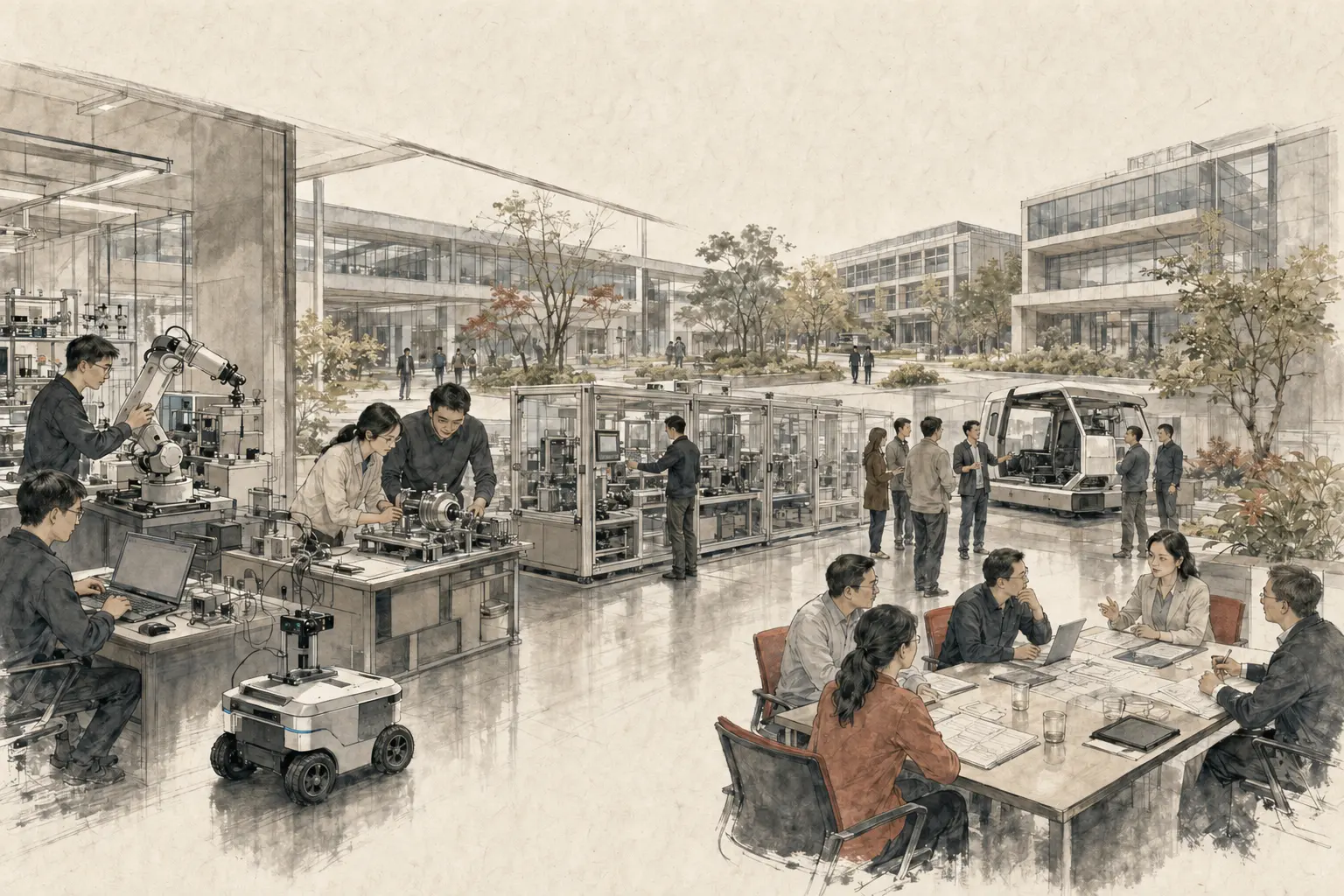
EDITORIAL THESIS
The institute is a standing commercialization platform linking government, industry, academia, research, finance, intermediaries and use.
Institution-wide, legal-entity and program-level outcomes must be separated by source and date.
Korea should build an unbroken regional chain from demand and research to pilots, investment, validation and procurement.
Swipe sideways for detail; tap the graphic to open it full size.
The institute is a public-service institution directly under the Zhejiang Provincial Government and a new-type R&D and commercialization platform jointly established with Tsinghua University. It uses enterprise-style management, but is neither a conventional branch campus, a private company nor a simple university liaison office.
Established under a 2003 Zhejiang–Tsinghua agreement and headquartered in Jiaxing, it combines a governing council, research institutes, regional cooperation and a technology-finance and investment platform.
A department-level public-service institution directly under Zhejiang Province, operated with enterprise-style management.
Jointly built by Zhejiang and Tsinghua, with a governing council reviewing leadership, annual work, assets and finances.
It positions itself between university-origin research and the applied research, pilot testing, productization and market scale that follow.
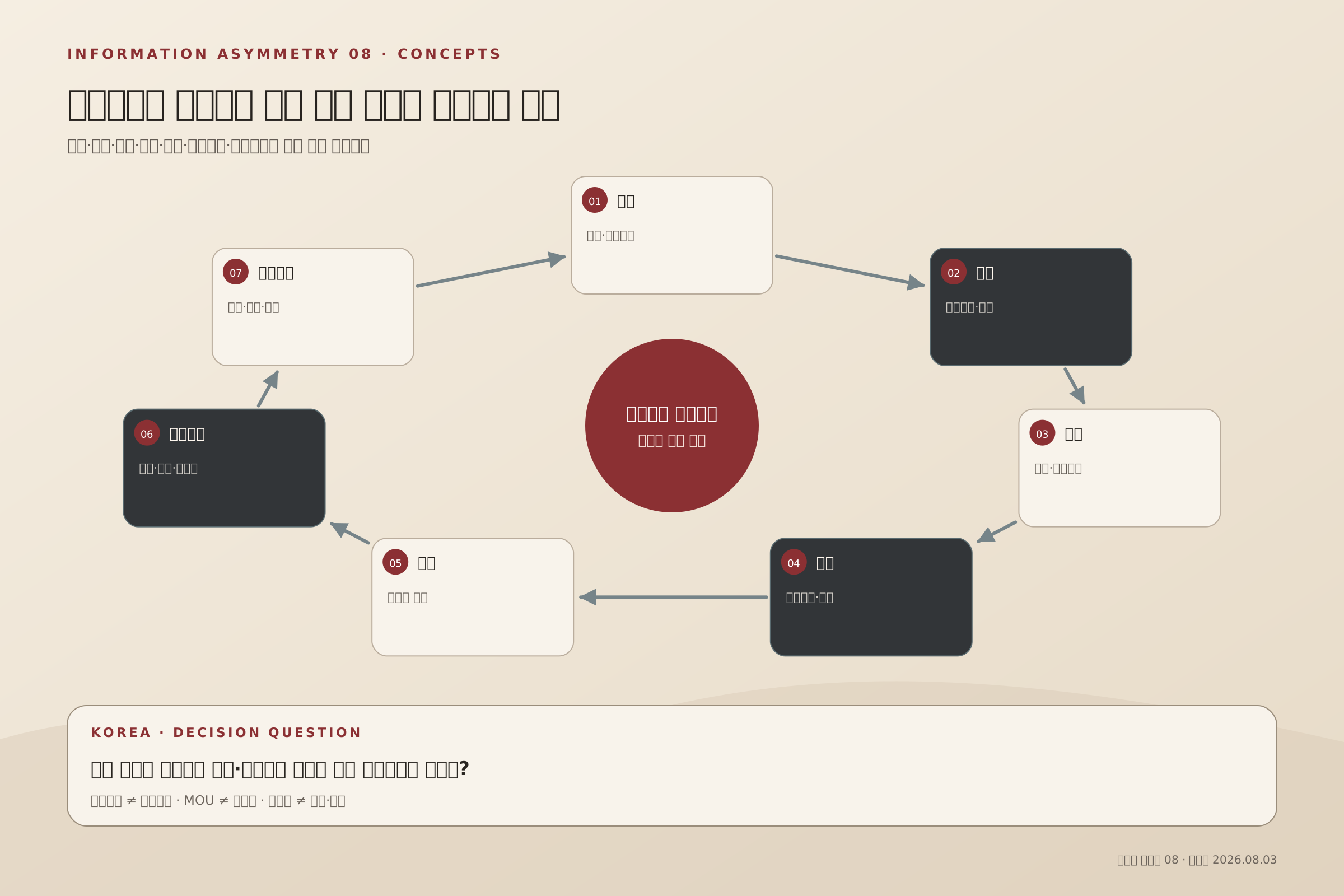
The two share a lineage of seven functions, but their wording, order and authorship differ. PWSGROUP’s formulation does not rename the institute’s model; it reorganizes the functions for Korean regional innovation and Korea–China execution.
The institute’s official sequence links public support, industry demand, universities, research, finance and technology intermediaries to market application.
PWSGROUP’s Korean practice framework starts with place, connects industry, academia, research and finance, tests real user demand, then uses professional intermediation to complete execution.
Rules, public platforms, regional coordination and early risk-sharing
Demand, co-development, production, supply chains and commercialization
Disciplines, talent, education and upstream research
Applied R&D, validation, prototypes, pilot testing and problem-solving
Investment, funds, banking and insurance for commercialization and growth
Transfer, IP, legal, accounting, standards, certification and matching
Real users, procurement, operating environments and purchase validation
Pairs R&D teams with commercialization entities and dedicated capital.
Combines research, pilot and production space, industrial clustering and finance.
Carries institute capabilities into county-level industry through local platforms, incubators and funds.
Sources and incubates projects offsite, then relocates teams, technology and capital into Zhejiang’s industrial setting.
A wholly owned investment platform uses direct and fund investment to support transfer and company growth.
The figures below separate reporting dates: 984 granted patents, 2,600-plus companies and 88 listed companies are website values as of August 2, 2026; other items are marked as June disclosures. Attraction, investment and cooperation remain different relationships.
Reported June 2026
Institute website value on August 2, 2026
Institute website value on August 2, 2026; not the investment portfolio
Institute website value on August 2, 2026
Reported June 2026 cooperation footprint
Published by the institute’s regional-cooperation unit
The phrase was already on display when Liu Yandong visited in 2010. The contemporary record confirms praise, not that she coined the name.
The reported 2,600-plus companies, 88 listed companies as of August 2, 2026, and state-enterprise partnerships refer to different relationships and must not be collapsed into ownership or spinout claims.
The June 3 disclosure covered the then-82-company group. Its output and market value must not be combined with the August count of 88 or treated as institute revenue or valuation.
Attraction, development, investment, cooperation and spinouts require separate equity, contract, funding, IP and revenue checks. Korean adaptation should be judged by paid demand, pilot validation, procurement conversion and regional jobs.