
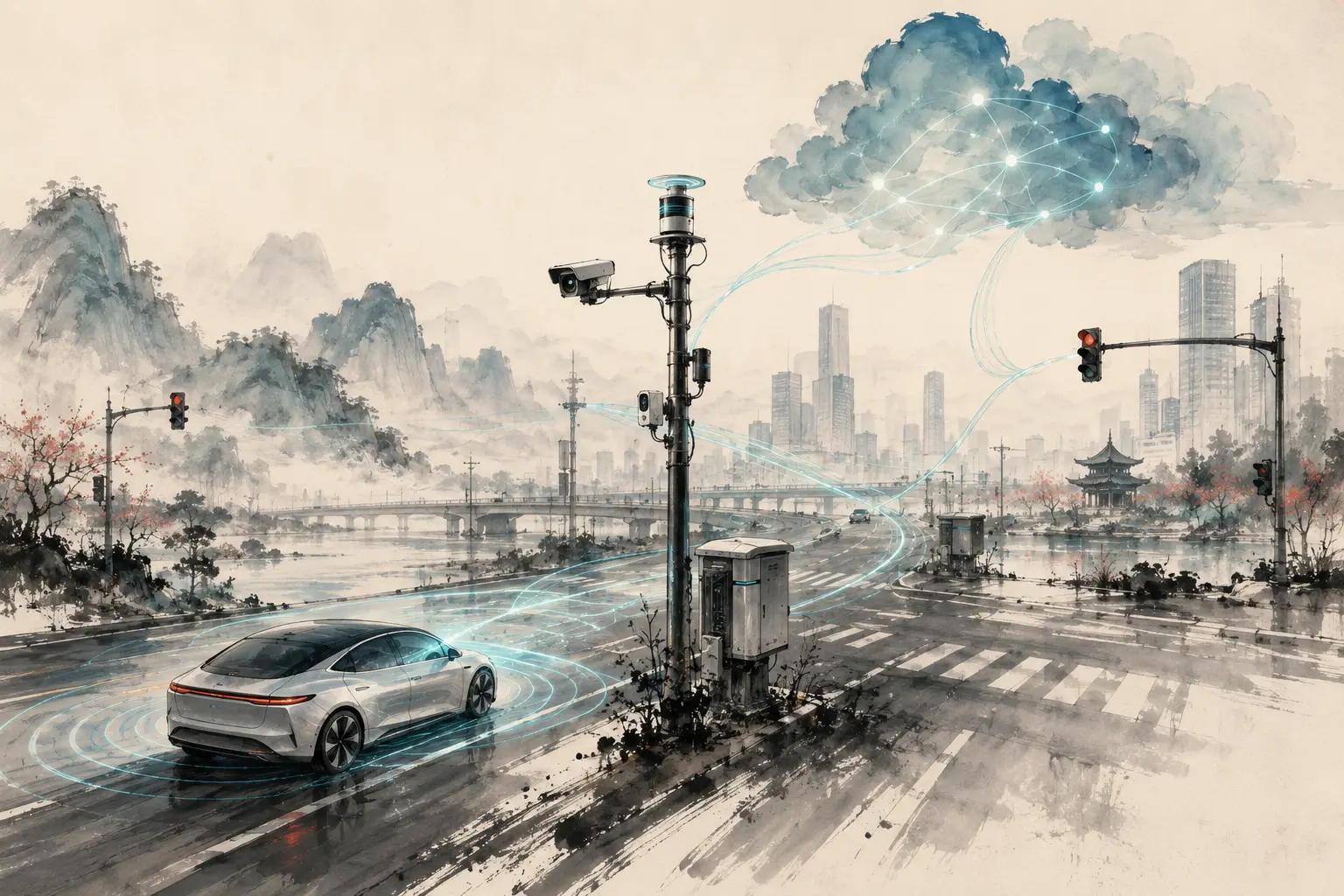
Modern ink-wash illustration of the operating system behind “How Does Vehicle–Road–Cloud Integration Differ from Vehicle-Only Intelligence?”

INFORMATION ASYMMETRY 55 · MOBILITY · URBAN TRANSPORT INFRASTRUCTURE

How Does Vehicle–Road–Cloud Integration Differ from Vehicle-Only Intelligence?

车路云一体化、单车智能与智能网联汽车

Combines vehicle intelligence with roadside sensing, edge computing, city cloud control, maps, communications and public accountability.

Cross-checked against Chinese primary, industry, research and media sources · Editorial, SEO and image audit August 20, 2026 · Currency basis: the latest CFETS rate available on August 20, 2026—USD/CNY 6.7854, published August 19, 2026 · monetary amounts shown only in U.S. dollars
Topic typeInfrastructure × Platform

EDITORIAL THESIS

Core proposition

  1. 01

    Vehicle–road–cloud integration does not replace vehicle safety; public infrastructure supplements blind-spot perception, traffic coordination and city management.

Swipe sideways for detail; tap the graphic to open it full size.

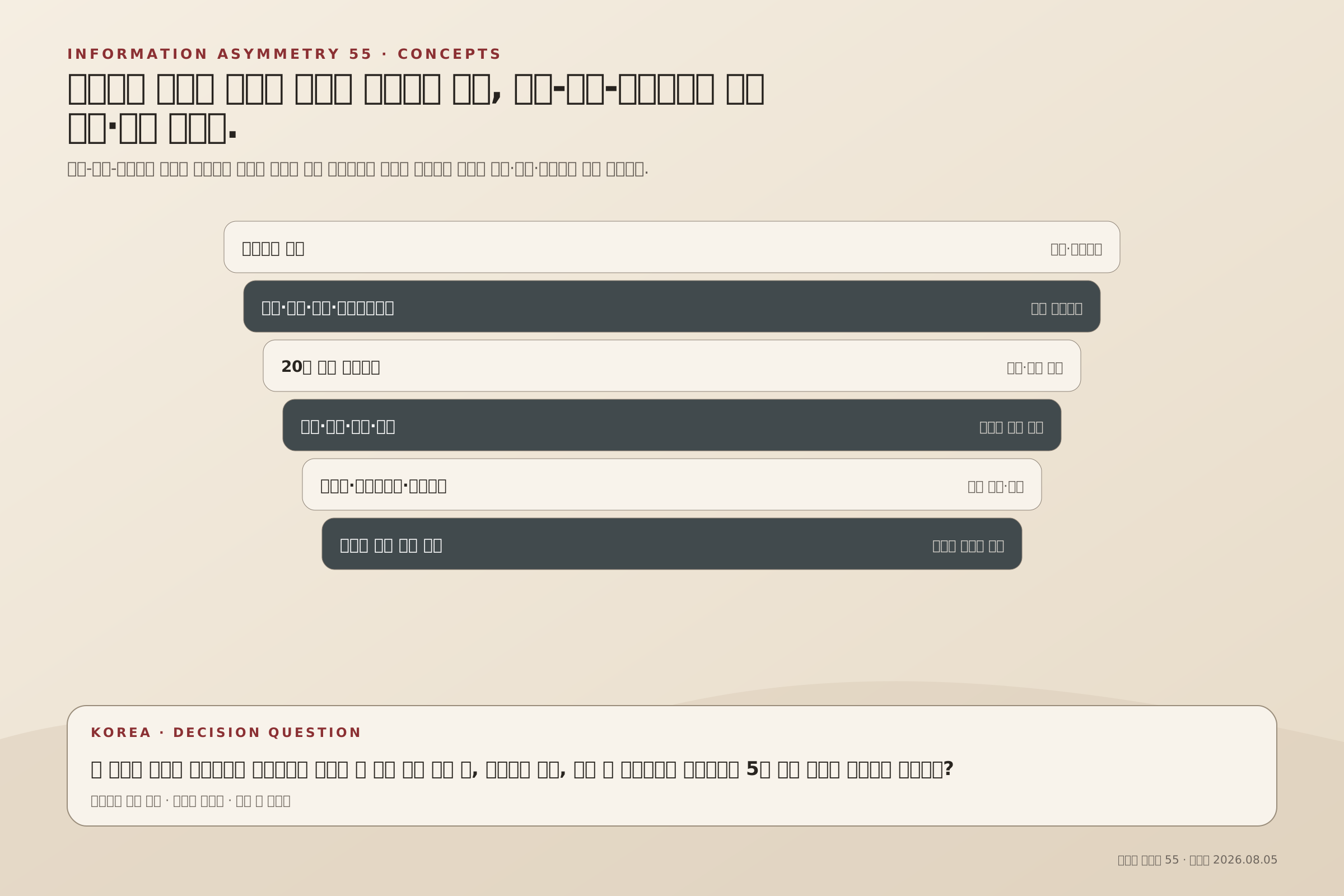
Infographic of the concept, operating structure, constraints and Korean response for How Does Vehicle–Road–Cloud Integration Differ from Vehicle-Only Intelligence?
55 · Operating structure — How Does Vehicle–Road–Cloud Integration Differ from Vehicle-Only Intelligence?A Korean-language graphic summarizing the concept, China’s operating system, constraints and Korea’s decision question.Download high-resolution SVG

CHINA SYSTEM · OPERATING LOGIC

Read the concept through its operating structure

01

Define the unit of analysis and concept boundary

This section follows the Korean primary report, linking official texts, responsible actors, company processes and field evidence.

02

Explain the industrial essence and value creation

This section follows the Korean primary report, linking official texts, responsible actors, company processes and field evidence.

03

Map China’s system as an executable chain

This section follows the Korean primary report, linking official texts, responsible actors, company processes and field evidence.

04

Separate policy targets from field outcomes

This section follows the Korean primary report, linking official texts, responsible actors, company processes and field evidence.

05

Locate the real execution bottleneck

This section follows the Korean primary report, linking official texts, responsible actors, company processes and field evidence.

06

Translate the conclusion into a Korean decision

This section follows the Korean primary report, linking official texts, responsible actors, company processes and field evidence.

Primary, industry, research and media sources

The Korean primary report cross-checks Chinese official texts with industry, research and media evidence.

01Official5개 부처 차량-도로-클라우드 응용 시범 통지02Official20개 시범도시·도시연합 선정 결과03Official충칭시 — 응용 시범의 구조와 운영주체04Official저장성 — 차량-도로-클라우드 규모화 해설05Official난징시 — 2025년 시범 운영자료06Official충칭시 — 2026년 데이터 상호운용 과제07Media36Kr — 차량-도로-클라우드 병목 분석08MediaTechNode — 중국 지능형 교통 산업 동향
Back to Information Asymmetry