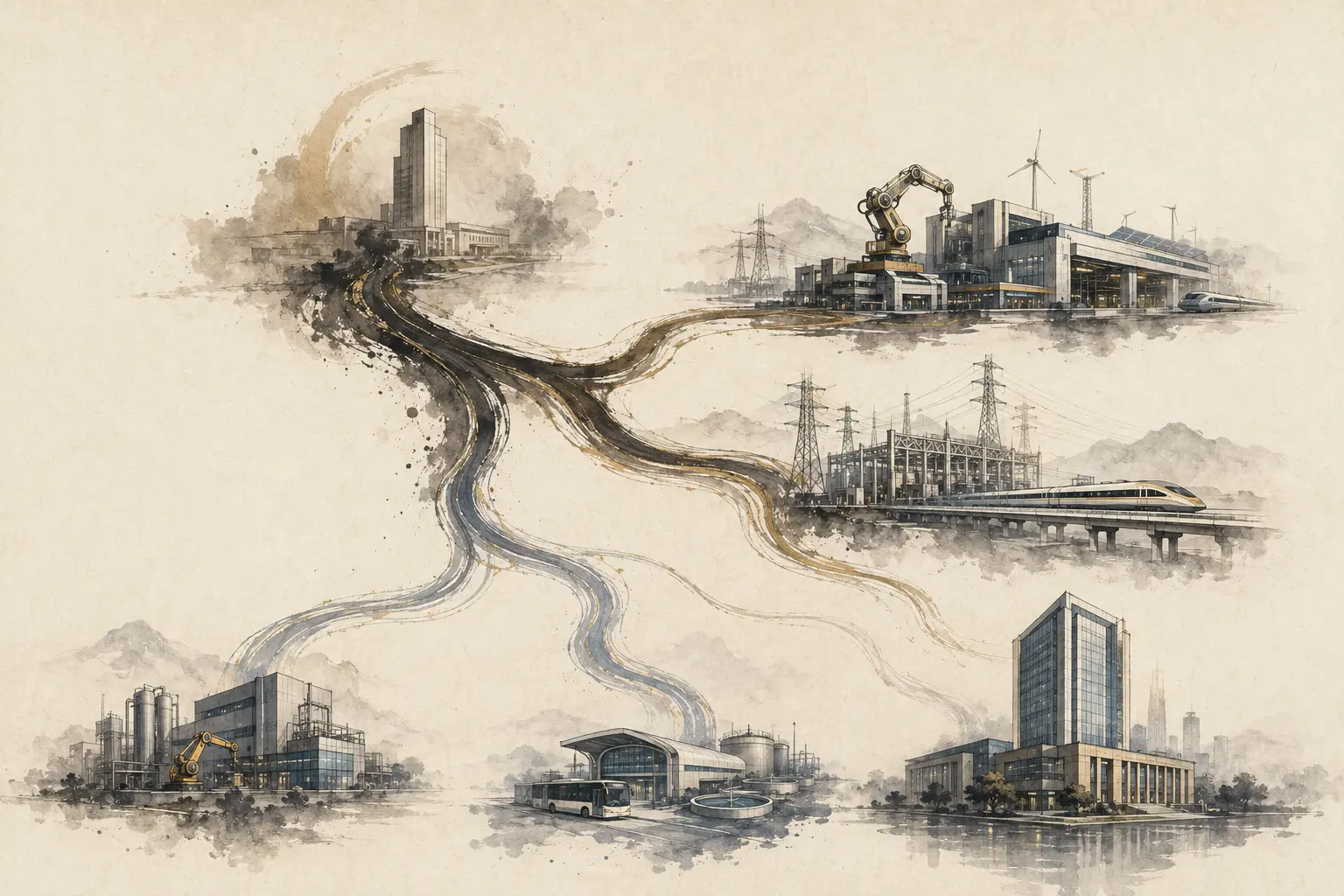
Modern ink-wash map of central and local state capital flowing into distinct companies and institutions

INFORMATION ASYMMETRY 14 · COMPANY · STATE CAPITAL

中央企业、地方国企、国有控股与混合所有制

A Central SOE Is Not the Same as Any State-Owned Enterprise

Classifies central and local SOEs, state-wholly-owned, state-controlled, state-invested and mixed-ownership firms by investor, supervisor and control.

Cross-checked against Chinese primary, industry, research and media sources · August 3, 2026 · Currency basis: the latest CFETS rate available on August 3, 2026—USD/CNY 6.7894, published July 31, 2026 · monetary amounts shown only in U.S. dollars
Topic typeCompany-identification × capital

EDITORIAL THESIS

Core proposition

  1. 01

    ‘SOE’ is a broad ownership category; a central SOE is a specific centrally supervised group. State ownership does not automatically mean state guarantee or government liability.

Swipe sideways for detail; tap the graphic to open it full size.

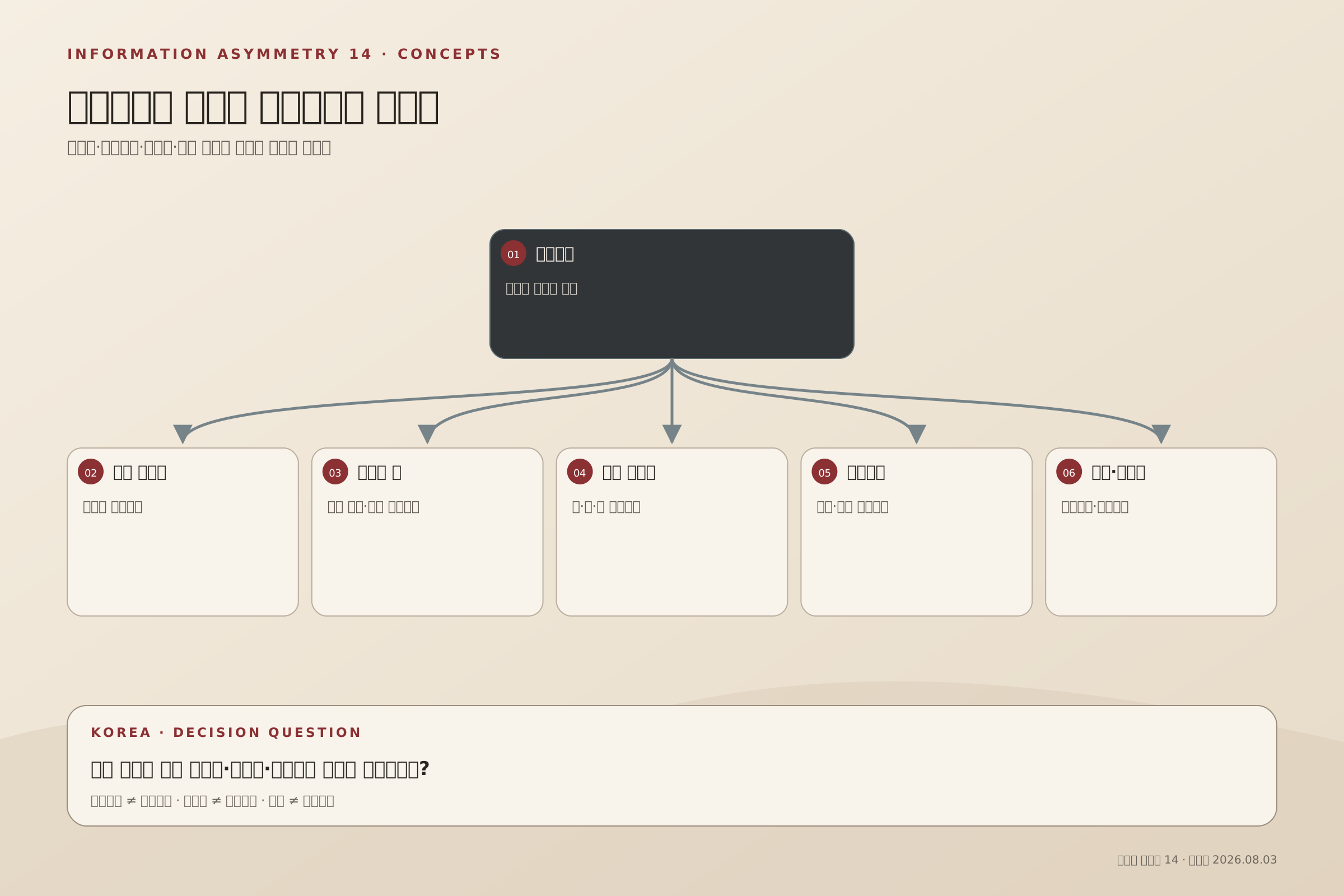
Infographic of the concept, operating structure, constraints and Korean response for A Central SOE Is Not the Same as Any State-Owned Enterprise
14 · Operating structure — A Central SOE Is Not the Same as Any State-Owned EnterpriseA Korean-language graphic summarizing the concept, China’s operating system, constraints and Korea’s decision question.Download high-resolution SVG

CHINA SYSTEM · OPERATING LOGIC

Read the concept through its operating structure

01

Identify central SOEs by their supervising investor

Central SOEs commonly refer to centrally managed groups supervised by SASAC, while central financial SOEs use other frameworks. Group parents, tiered subsidiaries, joint ventures and ordinary partners must be separated.

02

Local SOEs belong to different local-government levels

Local SOEs are supervised by provincial, city or county state capital authorities. Their investment decisions are not administrative government decisions and their debt is not automatically government debt.

03

Wholly owned, controlled and invested positions differ

State-sole, wholly state-owned, state-controlled and state-invested firms differ in legal form and control. Look beyond 51% to voting rights, boards, vetoes and actual-controller disclosure.

04

Mixed ownership does not mean privatization

Mixed-ownership firms combine state, private, foreign or employee capital. This is not synonymous with privatization, nor does it imply government guarantee, monopoly or policy orders.

05

Transactions depend on liable assets, not the group name

Korean counterparties should verify the exact entity, unified social credit code, ownership, actual controller, group tier, consolidation and guarantees. Group branding and government background do not replace contractual liability.

FIELD CHECK · BEFORE DECISION

Questions to verify before applying this concept

  1. 01

    Who is the official investor and supervisor?

  2. 02

    Is the counterparty the parent, subsidiary or JV?

  3. 03

    Is the state controlling or merely invested?

  4. 04

    Is any government or parent guarantee documented?

Primary, industry, research and media sources

The Korean primary report cross-checks Chinese official texts with industry, research and media evidence.

01Official中央企业名录与国资委职责02Official中央企业混合所有制改革操作指引03Official国企改革三年行动带来哪些改变04Official混合所有制改革进展
Back to Information Asymmetry