

Modern ink-wash national market network removing local barriers while connecting specialized cities

INFORMATION ASYMMETRY 47 · POLICY · UNIFIED NATIONAL MARKET

Will a Unified National Market Eliminate Local Industrial Policy?

全国统一大市场、公平竞争审查与地方保护

Separates national common rules from regional variation and tests local protection versus permissible functional support in access, procurement, standards, inspection and competition review.

Cross-checked against Chinese primary, industry, research and media sources · Editorial, SEO and image audit August 4, 2026 · Currency basis: the latest CFETS rate available on August 5, 2026—USD/CNY 6.7917, published August 4, 2026 · monetary amounts shown only in U.S. dollars
Topic typePolicy-led × regulatory-risk

EDITORIAL THESIS

Core proposition

  1. 01

    A unified market does not erase regional differences; it reduces discriminatory access, procurement, standards and subsidies while preserving open functional support.

Swipe sideways for detail; tap the graphic to open it full size.

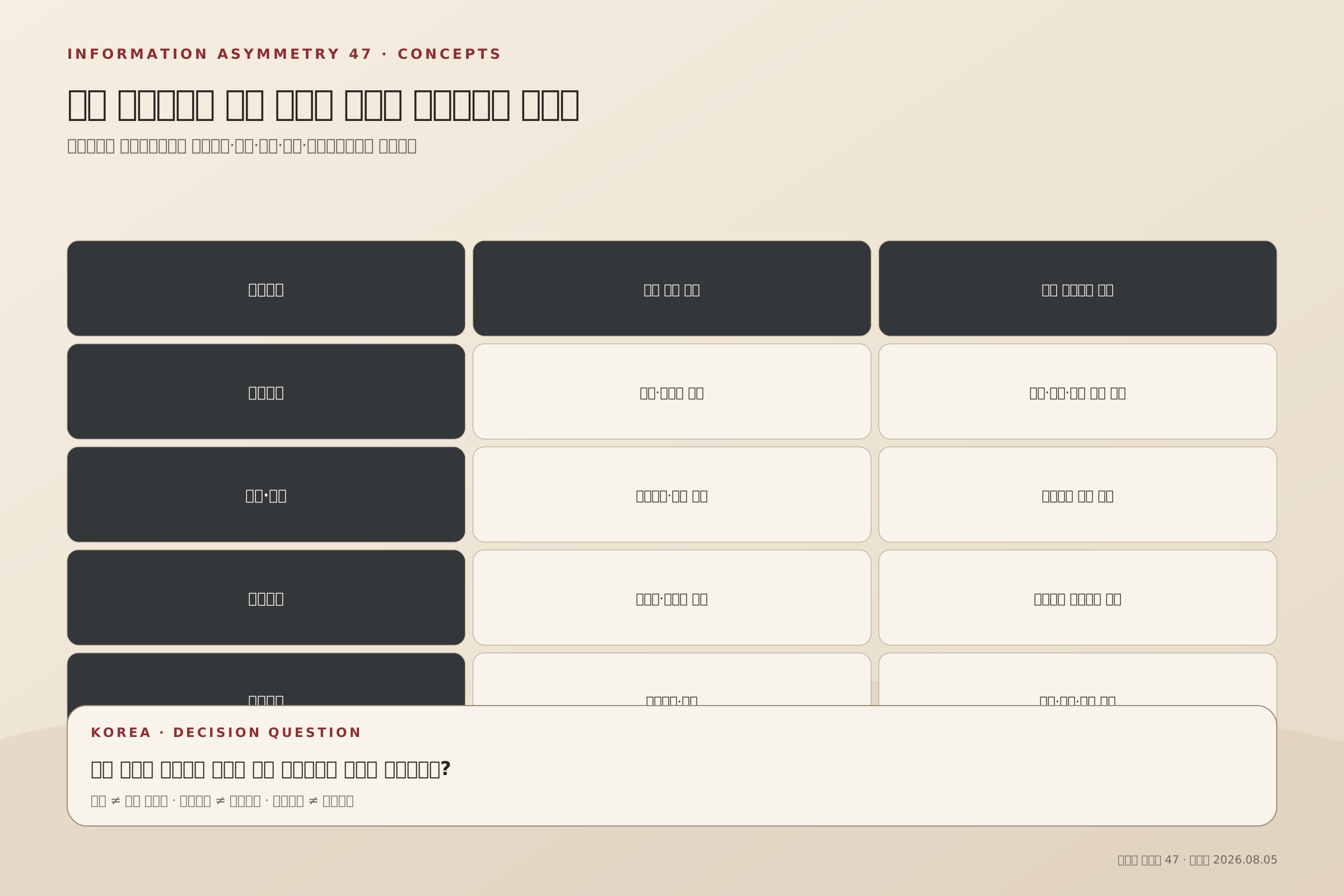
Infographic of the concept, operating structure, constraints and Korean response for Will a Unified National Market Eliminate Local Industrial Policy?
47 · Operating structure — Will a Unified National Market Eliminate Local Industrial Policy?A Korean-language graphic summarizing the concept, China’s operating system, constraints and Korea’s decision question.Download high-resolution SVG

CHINA SYSTEM · OPERATING LOGIC

Read the concept through its operating structure

01

Define the industrial essence and concept boundary

This section separates commonly confused labels, legal objects and business units so a policy label or single metric is not mistaken for a market outcome.

02

Map China’s system as an executable chain

This section links central rules, local execution, institutional permissions, company processes and transaction evidence to show how the system reaches operations.

03

Separate announcement, inputs, operations and outcomes

Targets, approved lists, funding, operation, customer adoption and cash flow are different stages and must be verified with consistent definitions.

04

Locate the real execution bottleneck

This section tests licences, capability, data, talent, customers, cost, accountability and exit conditions to locate the slowest, least substitutable constraint.

05

Judge outcomes by evidence, not scale narratives

Primary rules should be cross-checked with company records, contracts, finance, operating logs, user outcomes and independent research, with definitions, period and limits disclosed.

06

Translate the conclusion into a Korean decision

The conclusion allocates work across government, industry, universities, research, finance, users and intermediaries, ending with owners, evidence, timing and KPIs.

Primary, industry, research and media sources

The Korean primary report cross-checks Chinese official texts with industry, research and media evidence.

01Official전국 통합시장 건설 가속화 의견 — 중국 국무원02Official시장진입 목록 2025 — 국가발전개혁위원회03Official공정경쟁심사 조례 — 중국 국무원04Official공정경쟁심사 조례 실시방법 — 국가시장감독관리총국05Official전국 통합시장 심화 기자회견 — 국가발전개혁위원회06Official전국 통합시장 건설 업무보고 202607Research중국 비즈니스환경 발전보고 2026 — 국가발전개혁위원회08ResearchChina Economic Update — World Bank
Back to Information Asymmetry