

Modern ink-wash pathways from early company cultivation to distinct public markets

INFORMATION ASYMMETRY 21 · CAPITAL · MARKET LAYERS

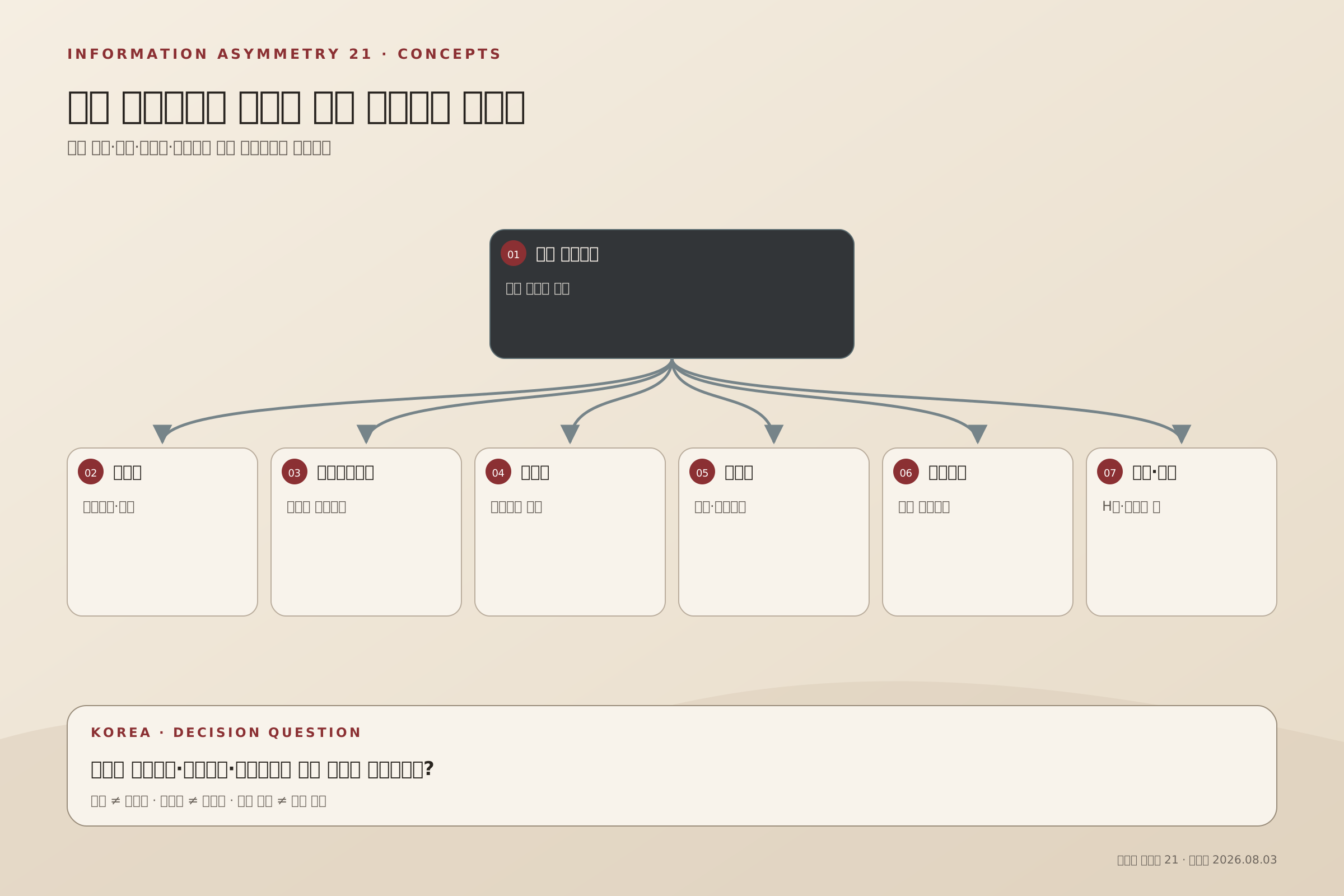
主板、科创板、创业板、北交所、新三板与区域性股权市场

Where Chinese Companies List and Grow

Maps Shanghai/Shenzhen main boards, STAR, ChiNext, Beijing Stock Exchange, NEEQ and regional equity markets by company stage, sector, disclosure, investors and transfer pathways.

Cross-checked against Chinese primary, industry, research and media sources · August 3, 2026 · Currency basis: the latest CFETS rate available on August 3, 2026—USD/CNY 6.7894, published July 31, 2026 · monetary amounts shown only in U.S. dollars
Topic typeCapital × company-growth

EDITORIAL THESIS

Core proposition

  1. 01

    China’s capital market is not one listing ladder but layered venues for different companies, technologies, investors and disclosure regimes.

Swipe sideways for detail; tap the graphic to open it full size.

Infographic of the concept, operating structure, constraints and Korean response for Where Chinese Companies List and Grow
21 · Operating structure — Where Chinese Companies List and GrowA Korean-language graphic summarizing the concept, China’s operating system, constraints and Korea’s decision question.Download high-resolution SVG

CHINA SYSTEM · OPERATING LOGIC

Read the concept through its operating structure

01

Main boards serve mature, larger companies

Shanghai and Shenzhen main boards serve relatively mature, larger firms under registration, continuous disclosure, trading and delisting rules.

02

STAR and ChiNext have distinct innovation mandates

STAR emphasizes hard technology and science-innovation attributes; ChiNext serves growth-oriented innovative firms. Specific listing-standard combinations still matter.

03

BSE and NEEQ form an SME-oriented axis

BSE focuses on innovative SMEs; NEEQ provides cultivation, quotation, trading and disclosure. NEEQ quotation should not be conflated with exchange listing.

04

Regional equity markets are local cultivation bases

Regional equity markets cultivate local unlisted SMEs and provide financial services; their investors, liquidity and disclosure differ from national exchanges.

05

Korea should read venue and business substance together

Diligence should verify venue, code, listing/quotation status, audit disclosure, float, control and delisting risk; offshore listings, H shares, red chips and VIEs require separate analysis.

FIELD CHECK · BEFORE DECISION

Questions to verify before applying this concept

  1. 01

    Is it exchange-listed or quoted elsewhere?

  2. 02

    What sector, scale and disclosure rules apply?

  3. 03

    What are actual liquidity and investor access?

  4. 04

    Are listing, technology, profit and cash flow separated?

Primary, industry, research and media sources

The Korean primary report cross-checks Chinese official texts with industry, research and media evidence.

01Official证监会:多层次资本市场服务科技创新02Official资本市场服务科技企业十六项措施03Official多层次资本市场板块架构04Official主板、科创板、创业板、北交所与新三板定位
Back to Information Asymmetry