
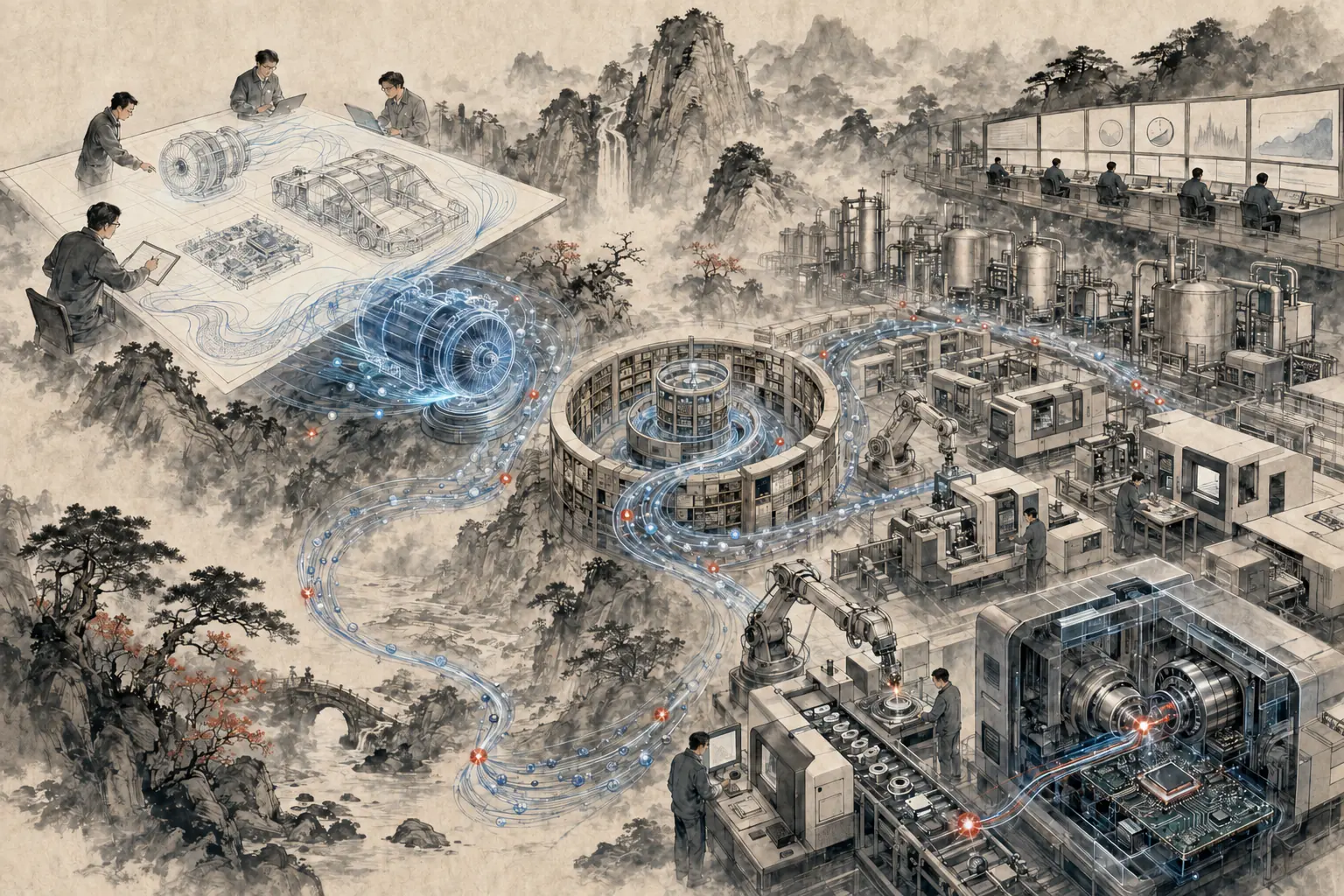
Modern ink-wash industrial-software stack from digital design to plant control and embedded machines

INFORMATION ASYMMETRY 50 · SOFTWARE · INDUSTRIAL KNOWLEDGE STACK

How Is Industrial Software Different from General Business Software?

工业软件、研发设计、生产控制与嵌入式软件

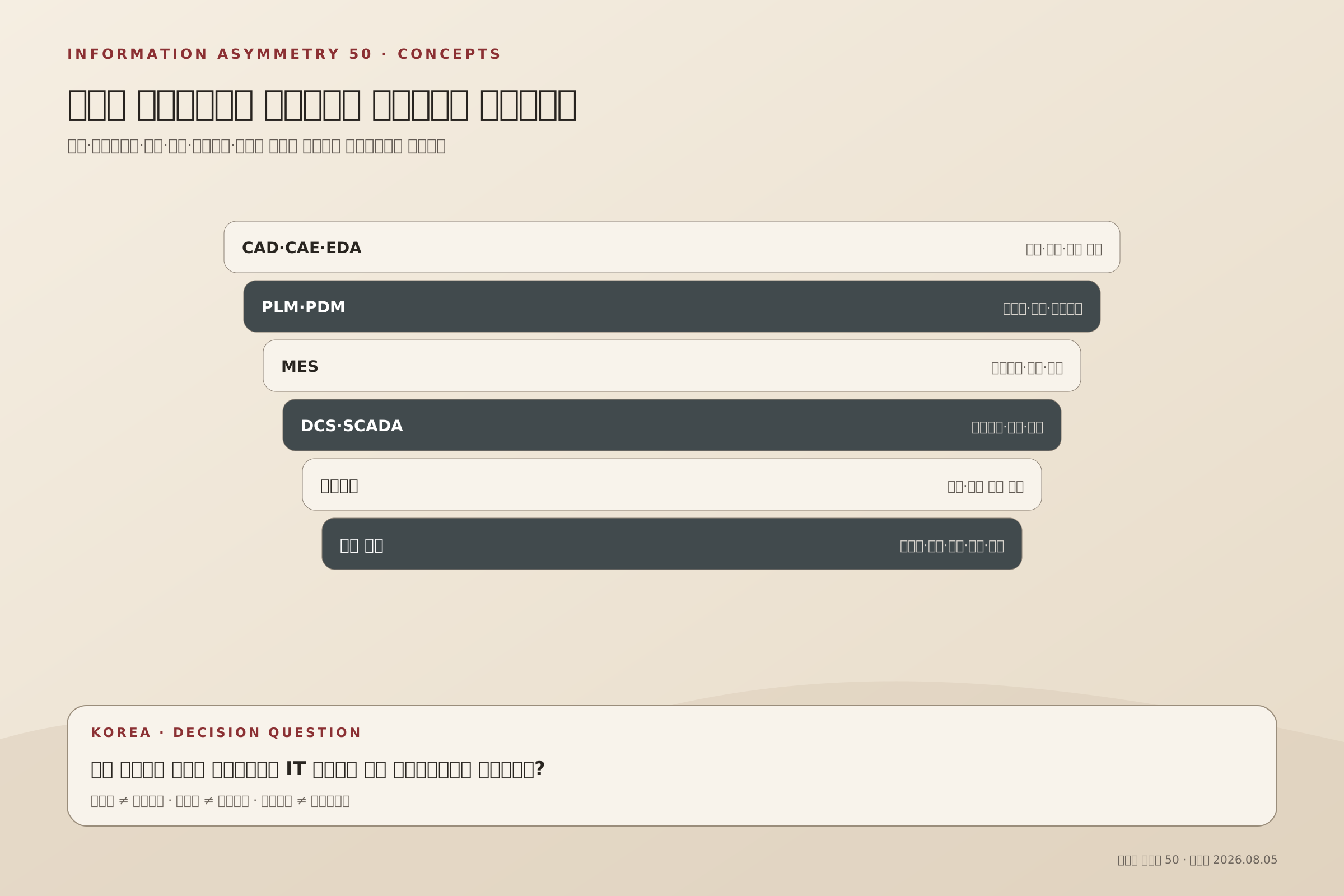
Connects CAD, CAE, EDA, PLM, MES, DCS, SCADA and embedded software through digital continuity and accountable change from design to operations.

Cross-checked against Chinese primary, industry, research and media sources · Editorial, SEO and image audit August 4, 2026 · Currency basis: the latest CFETS rate available on August 5, 2026—USD/CNY 6.7917, published August 4, 2026 · monetary amounts shown only in U.S. dollars
Topic typeProduct × infrastructure

EDITORIAL THESIS

Core proposition

  1. 01

    Industrial software is not office digitization; it is a production asset executing engineering knowledge, process rules, machine actions and safety duties in code and data.

Swipe sideways for detail; tap the graphic to open it full size.

Infographic of the concept, operating structure, constraints and Korean response for How Is Industrial Software Different from General Business Software?
50 · Operating structure — How Is Industrial Software Different from General Business Software?A Korean-language graphic summarizing the concept, China’s operating system, constraints and Korea’s decision question.Download high-resolution SVG

CHINA SYSTEM · OPERATING LOGIC

Read the concept through its operating structure

01

Define the industrial essence and concept boundary

This section separates commonly confused labels, legal objects and business units so a policy label or single metric is not mistaken for a market outcome.

02

Map China’s system as an executable chain

This section links central rules, local execution, institutional permissions, company processes and transaction evidence to show how the system reaches operations.

03

Separate announcement, inputs, operations and outcomes

Targets, approved lists, funding, operation, customer adoption and cash flow are different stages and must be verified with consistent definitions.

04

Locate the real execution bottleneck

This section tests licences, capability, data, talent, customers, cost, accountability and exit conditions to locate the slowest, least substitutable constraint.

05

Judge outcomes by evidence, not scale narratives

Primary rules should be cross-checked with company records, contracts, finance, operating logs, user outcomes and independent research, with definitions, period and limits disclosed.

06

Translate the conclusion into a Korean decision

The conclusion allocates work across government, industry, universities, research, finance, users and intermediaries, ending with owners, evidence, timing and KPIs.

Primary, industry, research and media sources

The Korean primary report cross-checks Chinese official texts with industry, research and media evidence.

01Official상하이 산업용 소프트웨어 추천목록 분류·검증요건02Official후베이 산업용 소프트웨어 우수사례 분류03Official충칭 산업용 소프트웨어 핵심과제 수요04Official안후이 산업용 소프트웨어 발전목록 202605Research전문화 중소기업 디지털전환 연구보고서 — 중국정보통신연구원06Research산업인터넷 플랫폼 백서 — 중국정보통신연구원07Research산업 빅데이터 기술·응용 백서 — 중국정보통신연구원08IndustryIndustrial Manufacturing Digital Transformation — KPMG China
Back to Information Asymmetry