
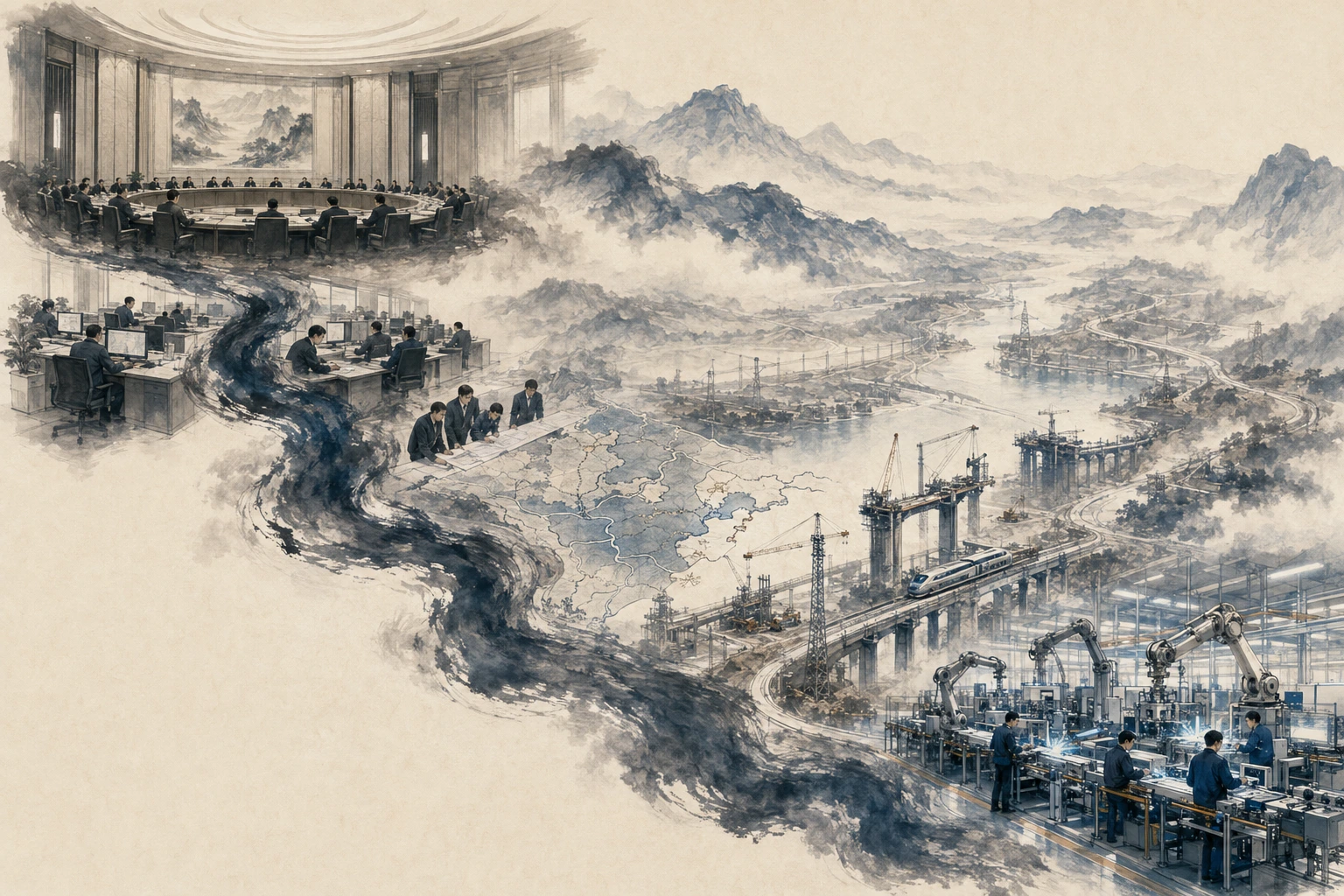
Modern ink-wash execution chain from national planning to regional infrastructure and operating factories

INFORMATION ASYMMETRY 12 · POLICY · PLAN EXECUTION

五年规划与三级四类国家规划体系

How a Five-Year Plan Becomes Real Projects

Explains China’s three-level, four-type planning system and how national plans connect to spatial, sectoral, regional and local plans, annual budgets and major projects.

Cross-checked against Chinese primary, industry, research and media sources · August 3, 2026 · Currency basis: the latest CFETS rate available on August 3, 2026—USD/CNY 6.7894, published July 31, 2026 · monetary amounts shown only in U.S. dollars
Topic typePolicy-led × infrastructure

EDITORIAL THESIS

Core proposition

  1. 01

    A Chinese five-year plan is not one document but an operating system linking three administrative levels and four planning types to annual plans, fiscal resources, land and projects.

Swipe sideways for detail; tap the graphic to open it full size.

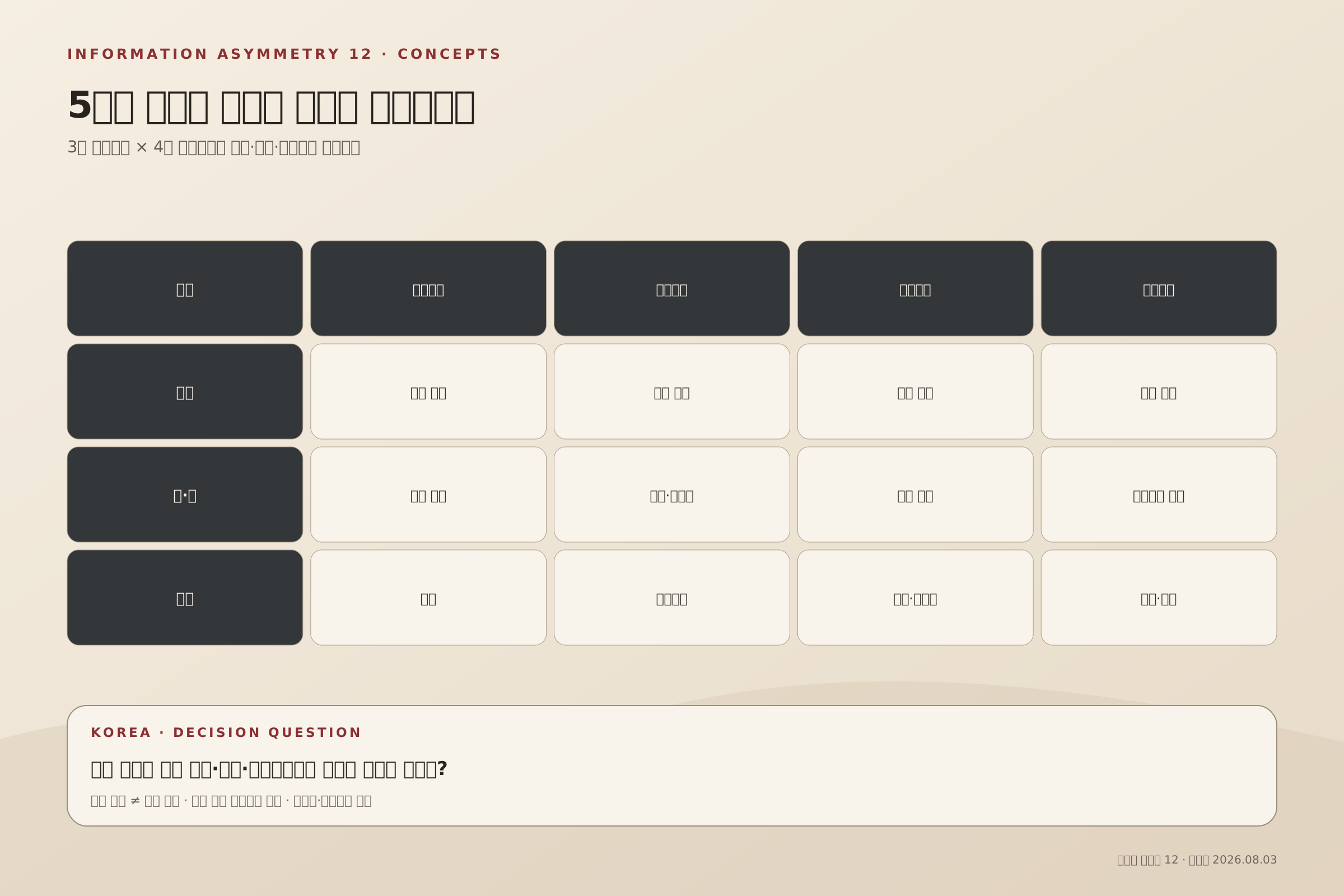
Infographic of the concept, operating structure, constraints and Korean response for How a Five-Year Plan Becomes Real Projects
12 · Operating structure — How a Five-Year Plan Becomes Real ProjectsA Korean-language graphic summarizing the concept, China’s operating system, constraints and Korea’s decision question.Download high-resolution SVG

CHINA SYSTEM · OPERATING LOGIC

Read the concept through its operating structure

01

The national development plan is the lead document

The 2026 National Development Planning Law formalized three levels—national, provincial and city/county—and four types—development, spatial, sectoral and regional. Inclusion signals direction, not automatic enterprise approval or support.

02

Tasks split across land, sectors and regions

Spatial plans set development boundaries; sector plans specify field tasks; regional plans organize place-based coordination. Industrial projects must also align with land, power, environmental, data and finance arrangements.

03

Annual plans and budgets create execution capacity

Five-year goals flow into annual economic plans, work reports, budgets, ministry actions and project lists. Firms should verify responsible agencies, yearly funds, applications, procurement and performance—not merely plan inclusion.

04

Plans also include evaluation, adjustment and exit

Plans are not static command tables; mid-term and final evaluation can adjust projects and targets. Local ambitions cannot simply be added up and must be checked against utilization, prices, demand and cash flow.

05

Korea should connect document, budget and field execution

Korea should map national texts to ministry and local implementation, budgets, funds, procurement, sites and buyers, then design cooperation around responsibility, money, infrastructure, customers and exit conditions.

FIELD CHECK · BEFORE DECISION

Questions to verify before applying this concept

  1. 01

    Which planning level applies?

  2. 02

    Which planning type is it?

  3. 03

    Has it entered annual plans, budgets, notices and project lists?

  4. 04

    What are the evaluation, adjustment and exit rules?

Primary, industry, research and media sources

The Korean primary report cross-checks Chinese official texts with industry, research and media evidence.

01Official中华人民共和国国民经济和社会发展第十五个五年规划纲要02Official国家发展规划法答记者问03Official加强规划实施保障04Official五句话打开五年规划
Back to Information Asymmetry