
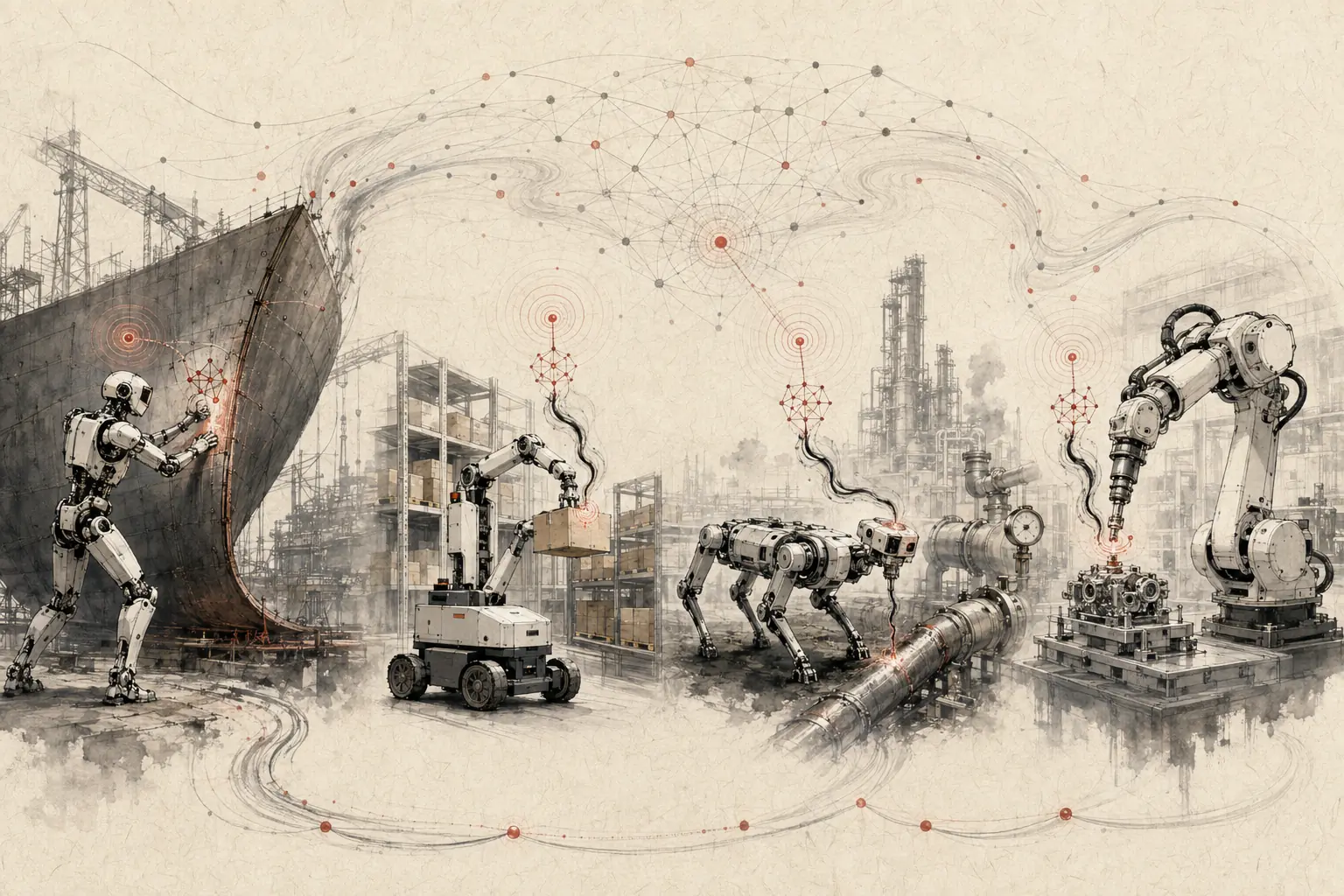
Modern ink-wash diverse humanoid, quadruped and mobile-manipulation robots performing perception, planning and action

INFORMATION ASYMMETRY 40 · PHYSICAL AI · EMBODIED INTELLIGENCE

具身智能、人形机器人、智能体与物理人工智能

Is a Humanoid Robot the Same as Embodied Intelligence?

Separates humanoid form, embodied perception–decision–action, agentic goal execution and the broader Physical AI system category.

Cross-checked against Chinese primary, industry, research and media sources · August 3, 2026 · Currency basis: the latest CFETS rate available on August 3, 2026—USD/CNY 6.7894, published July 31, 2026 · monetary amounts shown only in U.S. dollars
Topic typeProduct-consumer × platform × supply-chain

EDITORIAL THESIS

Core proposition

  1. 01

    A human-like body defines a humanoid but does not prove intelligence; value must be measured by repeatable task success, cost and safety in a specific environment.

Swipe sideways for detail; tap the graphic to open it full size.

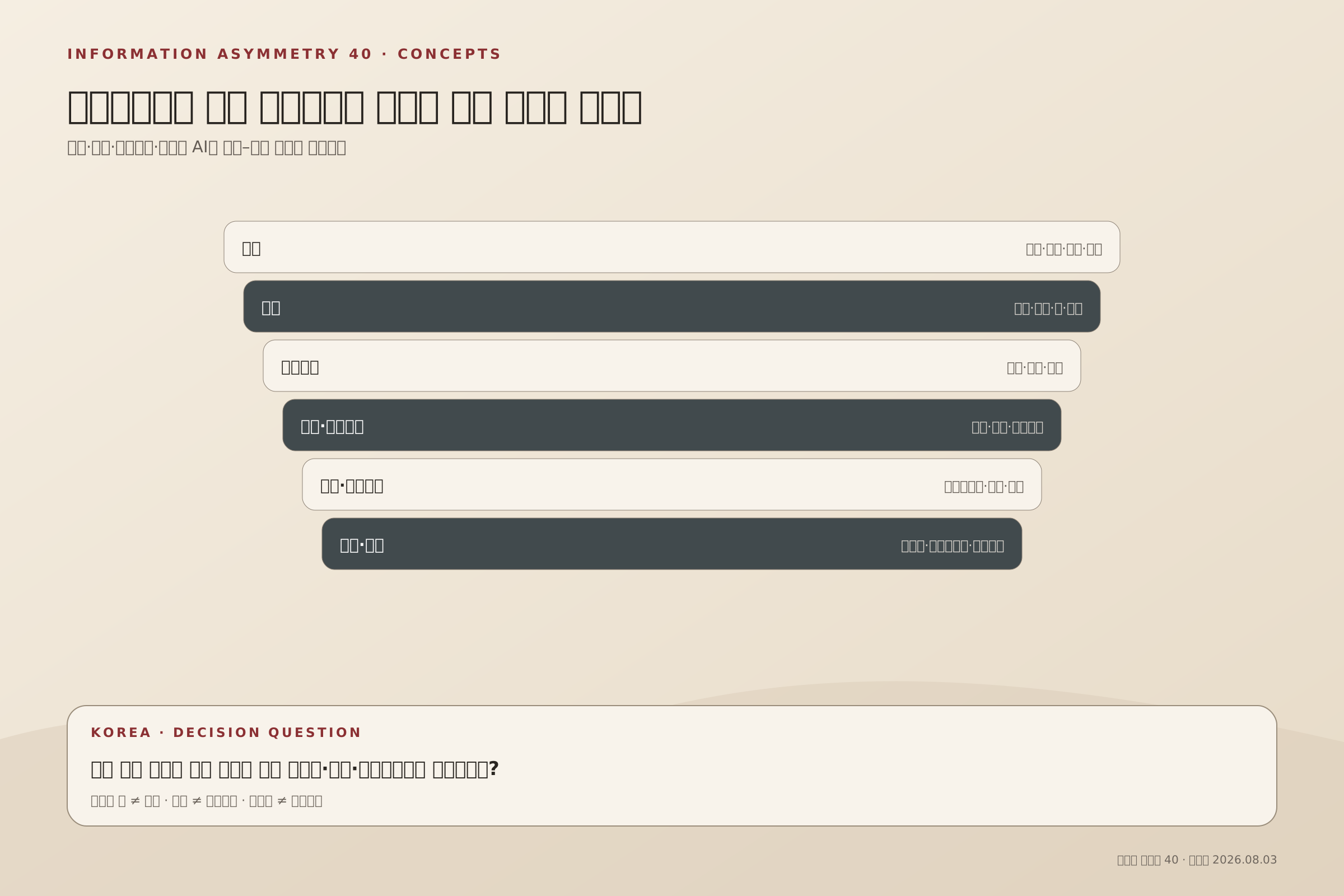
Infographic of the concept, operating structure, constraints and Korean response for Is a Humanoid Robot the Same as Embodied Intelligence?
40 · Operating structure — Is a Humanoid Robot the Same as Embodied Intelligence?A Korean-language graphic summarizing the concept, China’s operating system, constraints and Korea’s decision question.Download high-resolution SVG

CHINA SYSTEM · OPERATING LOGIC

Read the concept through its operating structure

01

Separate body form from intelligence

Humanoid describes a human-like body; embodied intelligence describes sensing, modelling, planning, acting and learning through body–environment interaction. Other robot forms may be embodied too.

02

An AI agent need not have a physical body

Agents may act entirely in software; Physical AI is a broader combination of models, sensing, control, machines and physics across robots, vehicles, drones and equipment.

03

The value chain spans body, brain, data and deployment

Actuators, sensors, batteries and hands form the body; perception, control, compute, world models and policies form intelligence; data, safety, integration and operations complete commercialisation.

04

China's 2026 standards framework spans the lifecycle

The 2026 framework, involving over 120 organisations, covers common foundations, brain-inspired compute, bodies/components, systems, applications and safety/ethics; it is a roadmap, not completed product assurance.

05

Korea should choose task economics, not robot counts

Korea should target specific risky, repetitive tasks in its strong industries and test success rate, intervention, cycle time, safety stops, uptime, maintenance and payback rather than demo appeal.

FIELD CHECK · BEFORE DECISION

Questions to verify before applying this concept

  1. 01

    Were body form and autonomy level separated?

  2. 02

    Were teleoperation, rule control and learned control shares verified?

  3. 03

    Were field success, intervention, safety, uptime and total cost measured?

  4. 04

    Were standards roadmap and actual certification, liability and insurance separated?

Primary, industry, research and media sources

The Korean primary report cross-checks Chinese official texts with industry, research and media evidence.

01Official人形机器人与具身智能标准体系(2026版)发布02Official人形机器人创新发展指导意见03Official首批人形机器人与具身智能重点标准项目04Media首个人形机器人与具身智能标准体系发布
Back to Information Asymmetry