Legal one-shareholder company
A company with one shareholder; failure to prove separation of company and personal assets can trigger joint liability.


INFORMATION ASYMMETRY 10 · AI ENTREPRENEURSHIP INFRASTRUCTURE
China’s AI one-person company is not a productivity myth. It is an industrial-incubation experiment in which cities and operators supply space, compute, models, data, compliance, finance and first customers as a shared headquarters.
Cross-checked against central and local primary texts, authoritative media and supplied materials · August 2, 2026EDITORIAL THESIS
The essence is not one employee, but a minimum complete organization that creates customer value and cash flow with AI and external infrastructure.
China’s leverage comes less from individual genius than from cities bundling compute, models, administration, first orders and finance.
Performance should be judged by paid pilots, repeat revenue, 12/24-month survival, compliance and continuity—not applications or occupancy.
DEFINITION · MECE
A company with one shareholder; failure to prove separation of company and personal assets can trigger joint liability.
A socio-economic label spanning freelancers, sole proprietors, studios, companies and small teams—not a new legal form.
An operating model in which one or a few core founders complete the business loop with AI agents and external services; definitions still vary by city.
Swipe sideways for detail; tap the graphic to open it full size.
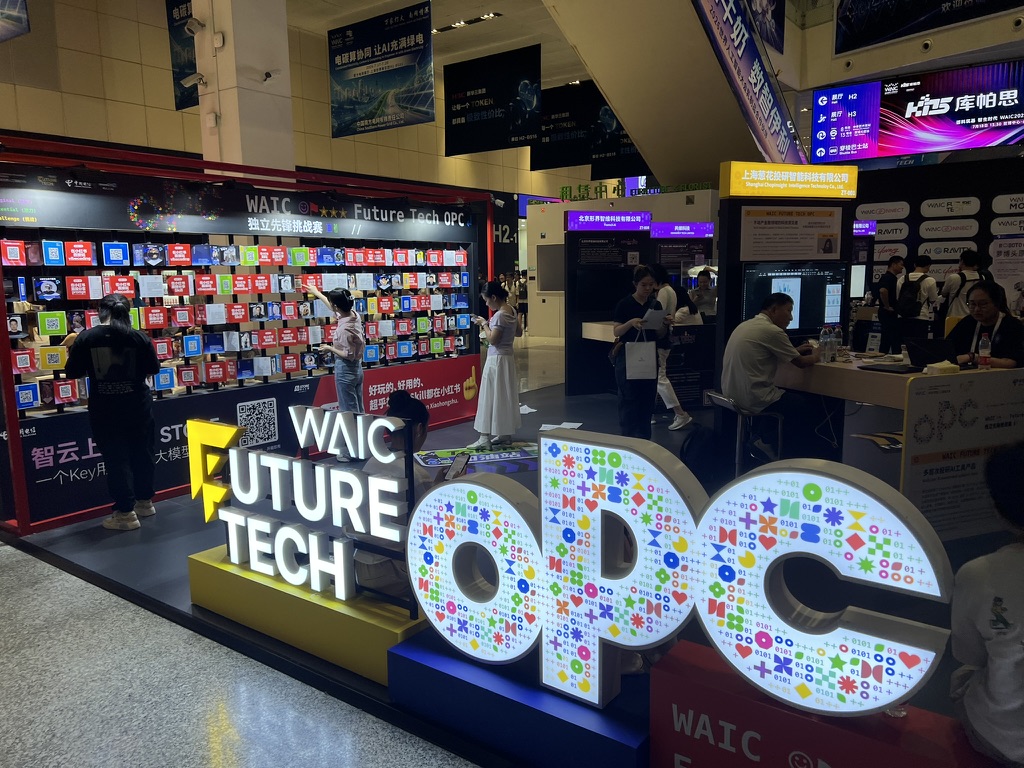
WAIC 2026 put Future Tech OPC on the exhibition floor. Yet the real protagonist is not a solitary genius; it is a system of local government, state developers, platforms, universities, finance and operators supplying company functions from outside.
A sole shareholder, one employee and an AI-native micro-firm are different populations. OPC is better understood as an operating principle than a permanent corporate identity.
The 2025 AI+ opinion promoted intelligent-native business forms without naming OPC. Communities moved first; 2026 cross-ministry and local plans then bundled compute, data, administration, scenarios and finance around the model.
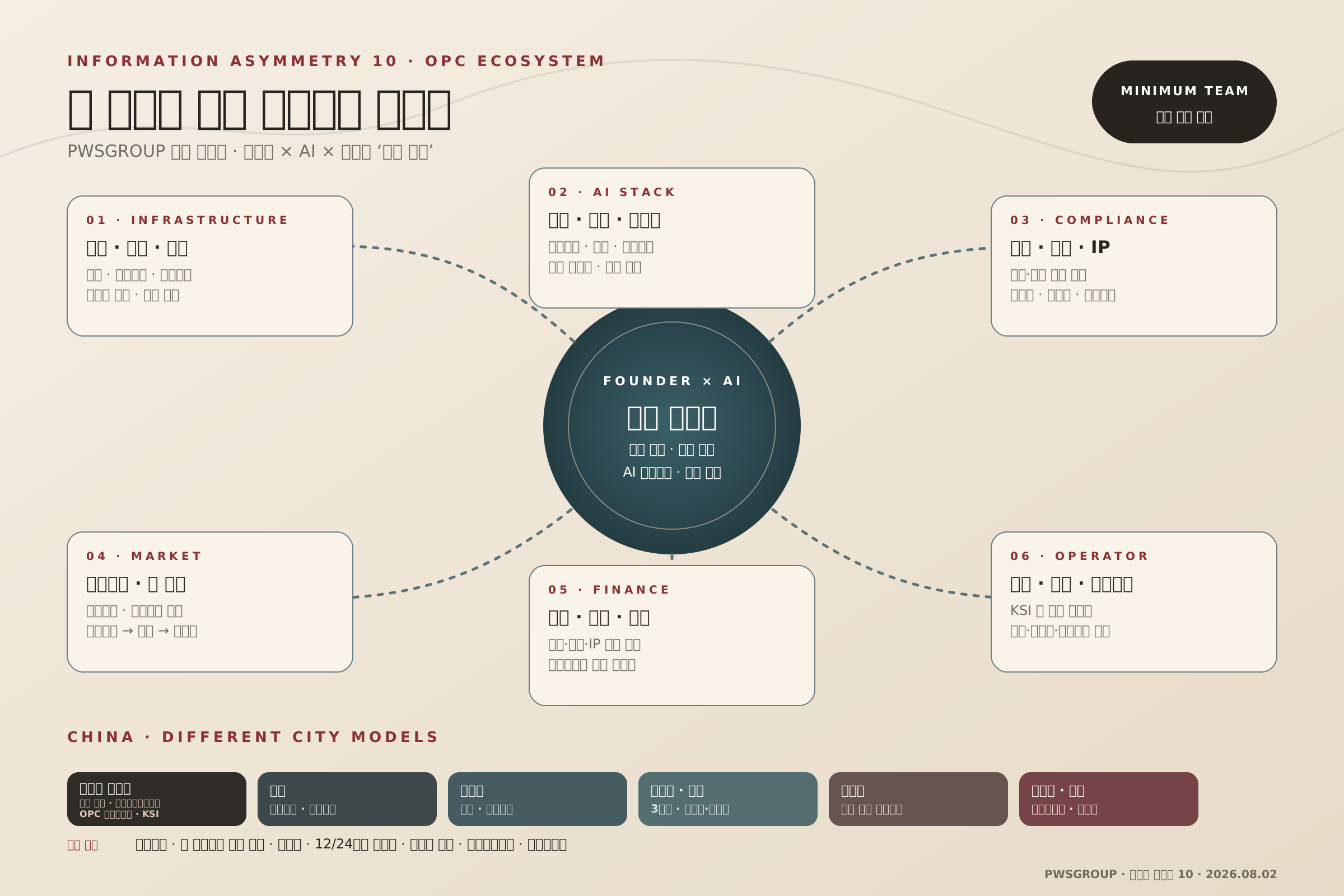
Founders bring domain knowledge; cities provide compute, models, data and compliance; anchor customers open scenarios and first orders; operators select and serve companies; finance follows contracts, revenue and IP. Only this chain turns ideas into paid pilots and repeat revenue.
Applications and occupancy do not substitute for survival, profit, repeat purchasing and compliance. Platform costs, data and IP, cyber duties, founder concentration and easy imitation are material risks. Korea should build industrial access and vertical shared headquarters, not merely subsidize individuals.
CITY SYSTEM MAP
Separate targets from outcomes, total campuses from OPC-only space, and owners from operators.
Beijing Haidian
The first-phase campus is 60,000 m², including a 6,000 m² OPC incubator. Zhongguancun Science City Company operates the community; KSI’s verified role is OPC-incubator ecosystem operation and related programs—not sole operation of the entire campus.
Shenzhen
The 2027 targets are at least ten OPC communities, each no smaller than 10,000 m², and at least 1,000 high-growth AI startups. The OPC setup service bundles registration, talent, IP, algorithm filing, finance and overseas expansion.
Hangzhou
Shared addresses, workstation registration, regulatory observation, patent acceleration, tools and demand matching are bundled. The Honghuhui operator reported 2,000+ applications and 51 selections through June 2026; this is one community’s count, not a citywide or long-term outcome.
Suzhou · Chengdu
Suzhou classifies communities around business models, application scenarios and ecosystem services; Chengdu combines park-led and anchor-company models with compute, models, data and validation.
Guangzhou · Shanghai · Wuhan
Guangzhou uses an observation sandbox focused on sole-natural-person shareholders; Lingang’s state-owned developer links work and housing; Wuhan combines an Alibaba center with local investors.
BOTTLENECKS · RISK
Platform dependence · model, cloud-price and policy changes can reset cost and quality.
Law and data · separate personal/company assets, customer data, generated IP and cyber duties.
Founder concentration · illness, burnout or absence can interrupt operations.
Market and capital fit · imitation and acquisition cost call for finance beyond venture equity.
The two supplied KSI/OPC decks inform the operating-model analysis; operator-reported figures are separated from government and authoritative sources. Link labels below remain in Korean; each link opens the cited Chinese or English original.