
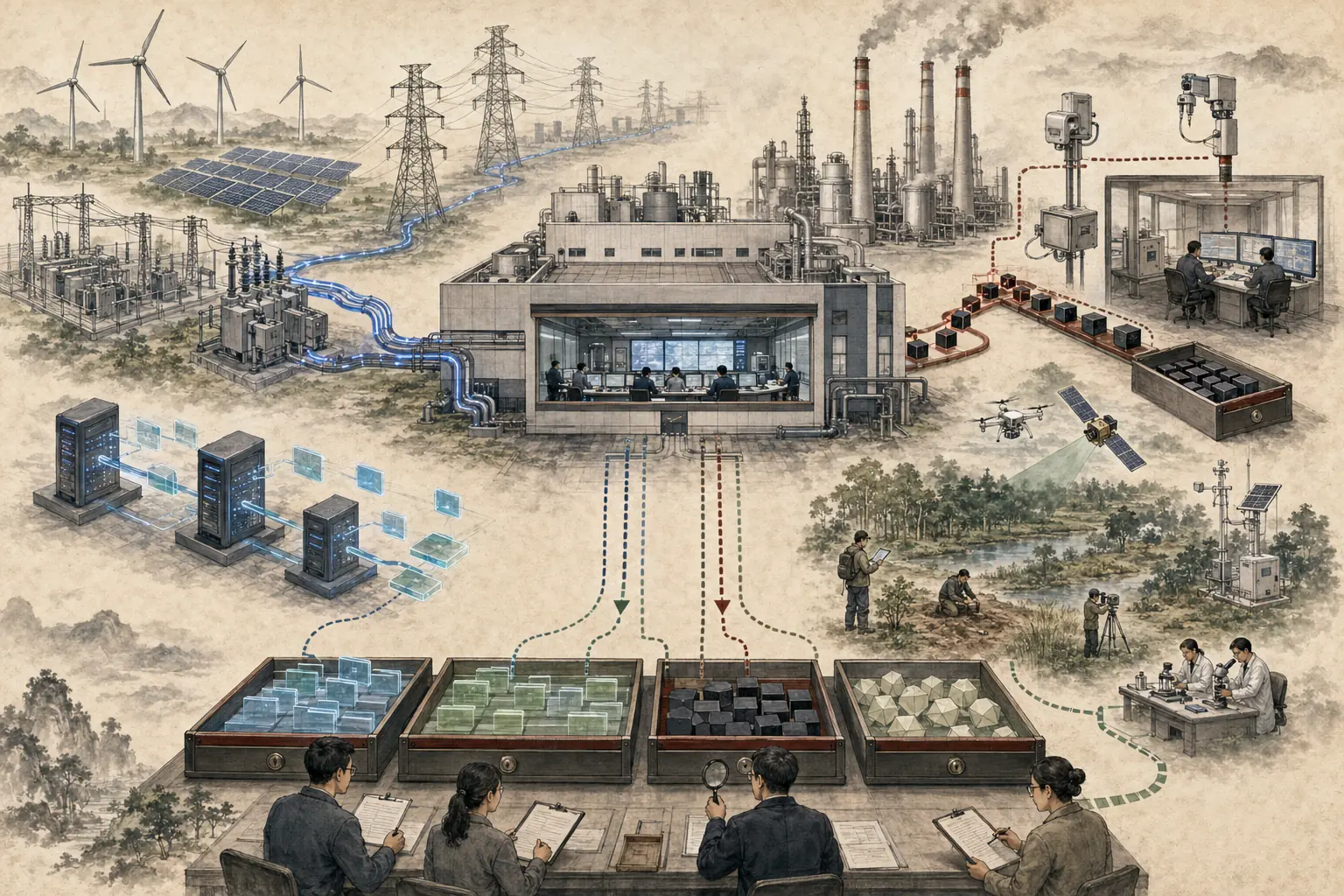
Modern ink-wash wind and solar power, certificates, carbon market and forest reductions on distinct paths to a factory

INFORMATION ASYMMETRY 39 · GREEN · POWER AND CARBON

绿电、绿证、碳排放配额与国家核证自愿减排量

Green Power and Carbon Allowances Are Not the Same Product

Separates green power, green certificates, mandatory allowances and CCERs across physical electricity, environmental attributes, compliance and voluntary offsetting.

Cross-checked against Chinese primary, industry, research and media sources · August 3, 2026 · Currency basis: the latest CFETS rate available on August 3, 2026—USD/CNY 6.7894, published July 31, 2026 · monetary amounts shown only in U.S. dollars
Topic typeInfrastructure × regulatory-risk

EDITORIAL THESIS

Core proposition

  1. 01

    Green power is electricity, certificates carry renewable attributes, allowances meet mandatory compliance and CCERs represent approved voluntary reductions; one does not automatically satisfy another.

Swipe sideways for detail; tap the graphic to open it full size.

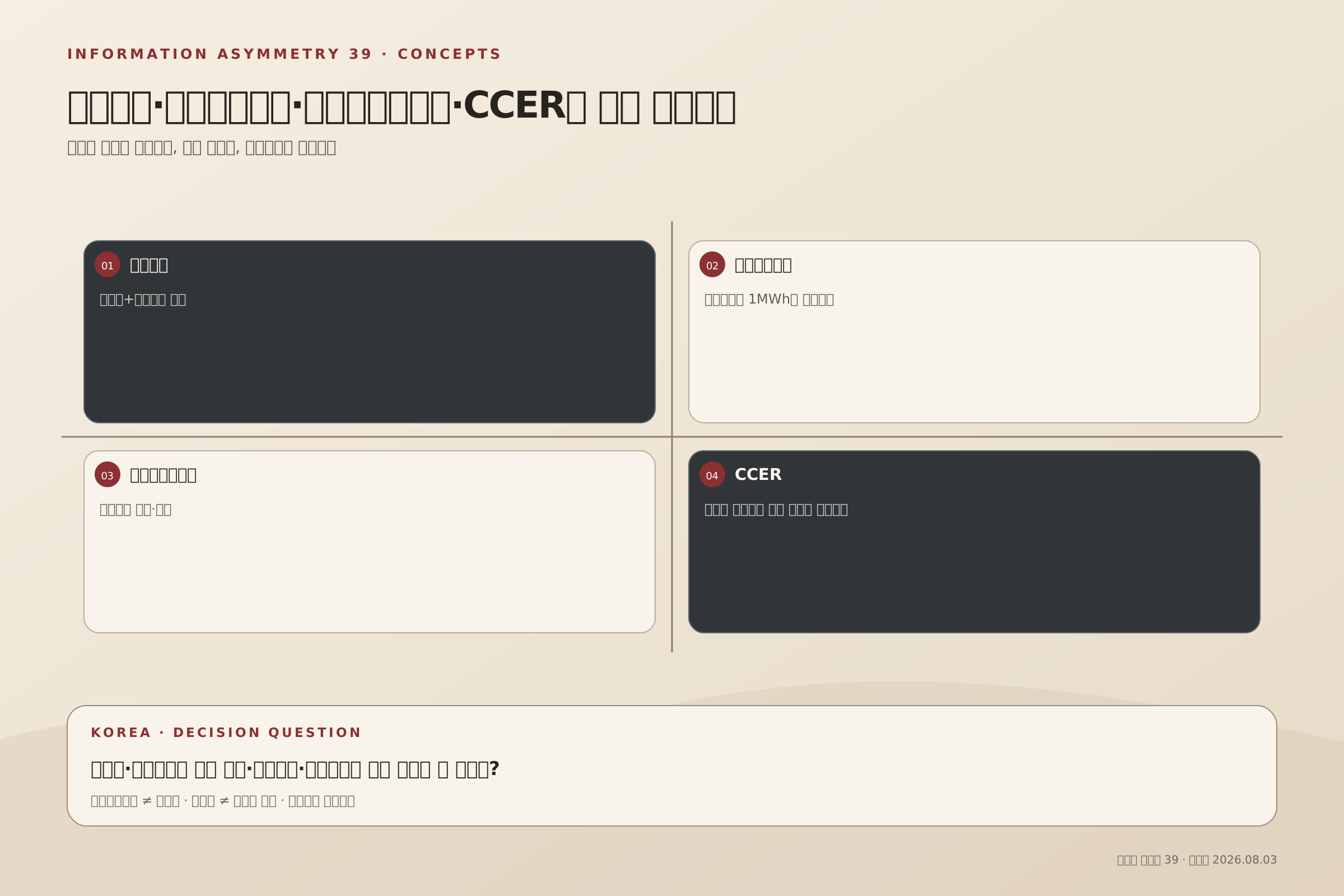
Infographic of the concept, operating structure, constraints and Korean response for Green Power and Carbon Allowances Are Not the Same Product
39 · Operating structure — Green Power and Carbon Allowances Are Not the Same ProductA Korean-language graphic summarizing the concept, China’s operating system, constraints and Korea’s decision question.Download high-resolution SVG

CHINA SYSTEM · OPERATING LOGIC

Read the concept through its operating structure

01

Green-power transactions combine electricity and attributes

Green-power trading combines renewable electricity and attributes, but does not mean specific electrons physically reach the buyer; grid, region and timing still matter.

02

One certificate evidences one MWh of renewable attributes

China's green certificate is the recognised proof of renewable electricity attributes; one equals 1,000 kWh and must be retired against the claiming consumer, period and use.

03

Carbon allowances are mandatory compliance units

Covered installations surrender allocated allowances against verified emissions; 3,378 power, steel, cement and aluminium entities were covered in 2025.

04

CCERs arise from approved voluntary projects

CCERs come from registered projects using approved methodologies and verification, may be used within limits for compliance, and must avoid double counting with certificates.

05

Korean firms need four separate ledgers

Chinese factories and data centres should separately track power contracts, certificates/retirement, allowance allocation/surrender and CCER use, then map them to each disclosure regime.

FIELD CHECK · BEFORE DECISION

Questions to verify before applying this concept

  1. 01

    Were electricity, attributes, allowances and reductions separated?

  2. 02

    Were source, region, period, consumer and retirement verified?

  3. 03

    Are coverage, allocation, verification and surrender managed?

  4. 04

    Is double counting across certificates, CCERs and product claims prevented?

Primary, industry, research and media sources

The Korean primary report cross-checks Chinese official texts with industry, research and media evidence.

01Official中国可再生能源绿色电力证书百问百答(2025年版)02Research中国绿色电力证书发展报告(2025)03Official关于做好2025年全国碳排放权交易市场有关工作的通知04Official2025年全国碳市场运行情况
Back to Information Asymmetry