

Modern ink-wash data flows through rights ledgers, exchange and finance toward a corporate asset

INFORMATION ASYMMETRY 38 · DATA · ASSETISATION

数据资源、数据要素、数据资产、数据产权与数据产品

Can Data Become a Corporate Asset?

Separates data resources, factors, assets, property interests, data IP and products across registration, trade, accounting, valuation, collateral and contribution.

Cross-checked against Chinese primary, industry, research and media sources · August 3, 2026 · Currency basis: the latest CFETS rate available on August 3, 2026—USD/CNY 6.7894, published July 31, 2026 · monetary amounts shown only in U.S. dollars
Topic typePlatform × regulatory-risk × infrastructure

EDITORIAL THESIS

Core proposition

  1. 01

    Data does not become an asset merely by existing or being registered; lawful control, quality, rights, repeatable benefit, measurable cost and accountability are required.

Swipe sideways for detail; tap the graphic to open it full size.

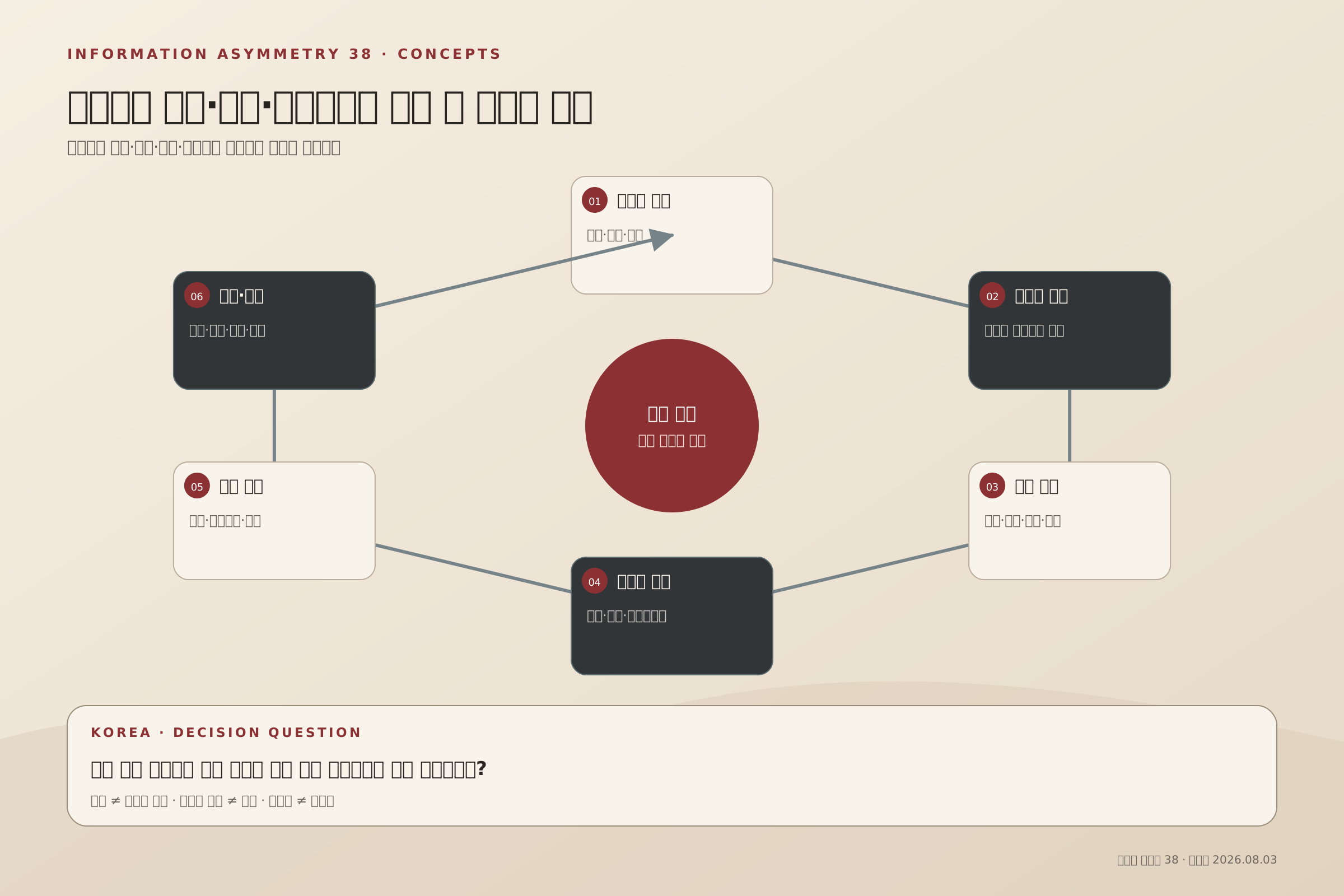
Infographic of the concept, operating structure, constraints and Korean response for Can Data Become a Corporate Asset?
38 · Operating structure — Can Data Become a Corporate Asset?A Korean-language graphic summarizing the concept, China’s operating system, constraints and Korea’s decision question.Download high-resolution SVG

CHINA SYSTEM · OPERATING LOGIC

Read the concept through its operating structure

01

Resources, factors and assets are different states

Data resources are managed collections; factors create productive value; assets require control, expected benefit and identifiable measurement.

02

Data property interests are not a single ownership right

China explores separating holding, processing/use and product-operation interests; privacy, trade secrets, copyright, contracts and public-data duties remain.

03

Registration, listing and accounting recognition differ

Rights registrations record datasets, processing and claims; exchange listing packages a tradable product; accounting recognition separately tests control, benefit and cost.

04

Valuation, collateral and contribution require cash flow and accountability

Data valuation depends on quality, scarcity, updating, contracts, lawful scope and cost; collateral finance also relies on credit, revenue, repurchase and guarantees.

05

Korea should design data products before asset labels

Korean organisations should define customer problem, fields, quality, rights, de-identification, delivery, SLA, price and liability, then contract raw/derived data, models, resale and deletion.

FIELD CHECK · BEFORE DECISION

Questions to verify before applying this concept

  1. 01

    Are lawful source and holding, processing and operating rights clear?

  2. 02

    Are quality, updating, usage and customer value measured?

  3. 03

    Are registration, listing, accounting and valuation separated?

  4. 04

    Were enforceable and recoverable rights verified for collateral/contribution?

Primary, industry, research and media sources

The Korean primary report cross-checks Chinese official texts with industry, research and media evidence.

01Official关于构建数据基础制度更好发挥数据要素作用的意见02Official企业数据资源相关会计处理暂行规定03Official“数据要素×”三年行动计划(2024—2026年)04Official数据产权登记工作指引(试行)
Back to Information Asymmetry