

Modern ink-wash city map comparing administrative authority and market functions rather than rank

INFORMATION ASYMMETRY 17 · REGION · CITY CLASSIFICATION

直辖市、副省级城市、计划单列市、国家中心城市与新一线

‘First-Tier’ and ‘New First-Tier’ Are Not Government Ranks

Separates official administrative and planning status—municipalities, sub-provincial and separately planned cities, national central cities—from commercial first-tier rankings.

Cross-checked against Chinese primary, industry, research and media sources · August 3, 2026 · Currency basis: the latest CFETS rate available on August 3, 2026—USD/CNY 6.7894, published July 31, 2026 · monetary amounts shown only in U.S. dollars
Topic typeRegional-identification × market

EDITORIAL THESIS

Core proposition

  1. 01

    Official city status comes from administration and national planning; first-tier labels are private measures of commercial appeal. Mixing them misreads both authority and market.

Swipe sideways for detail; tap the graphic to open it full size.

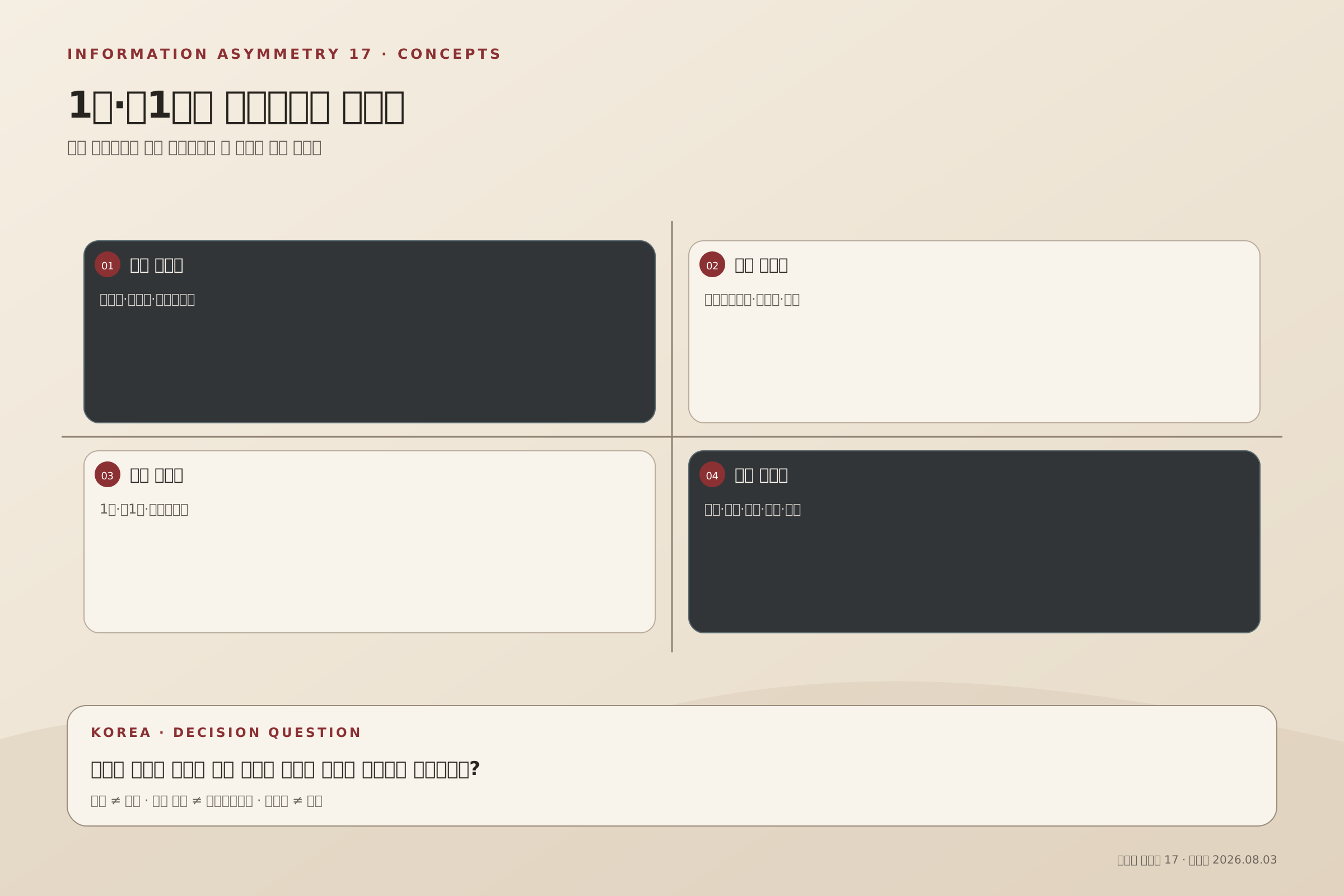
Infographic of the concept, operating structure, constraints and Korean response for ‘First-Tier’ and ‘New First-Tier’ Are Not Government Ranks
17 · Operating structure — ‘First-Tier’ and ‘New First-Tier’ Are Not Government RanksA Korean-language graphic summarizing the concept, China’s operating system, constraints and Korea’s decision question.Download high-resolution SVG

CHINA SYSTEM · OPERATING LOGIC

Read the concept through its operating structure

01

Municipalities are province-level jurisdictions

Beijing, Shanghai, Tianjin and Chongqing are province-level municipalities, but districts, counties and development zones within them still hold different powers.

02

Sub-provincial and separately planned status affects economic authority

Sub-provincial and separately planned cities overlap but are not synonyms. Separate planning affects national economic management; the central-province-city allocation still depends on the matter.

03

National central city is a planning function

National central city is a planning role in the urban and regional system, not necessarily an administrative promotion, and differs from national new areas, free-trade zones and city-cluster cores.

04

First-tier labels are market-analysis tools

First-tier and new first-tier lists are commercial rankings based on business resources, people, transport and potential. They help market analysis but create no approval, tax or administrative authority.

05

Read cities as functional portfolios, not one score

Korean firms should score customers, supply chains, R&D, manufacturing and logistics, regulation and data, finance, local fiscal capacity and Korea links separately—not rely on a tier label.

FIELD CHECK · BEFORE DECISION

Questions to verify before applying this concept

  1. 01

    Is it official status or a private ranking?

  2. 02

    What actual authority comes with the status?

  3. 03

    Are city, district and development-zone powers separated?

  4. 04

    Were customers, supply chains, talent and cost assessed independently?

Primary, industry, research and media sources

The Korean primary report cross-checks Chinese official texts with industry, research and media evidence.

01Official国务院机构文件中的计划单列市与副省级城市02Official36个重点城市发展报告03Official国家中心城市定位说明04Official国家发展改革委营商环境城市评价
Back to Information Asymmetry