
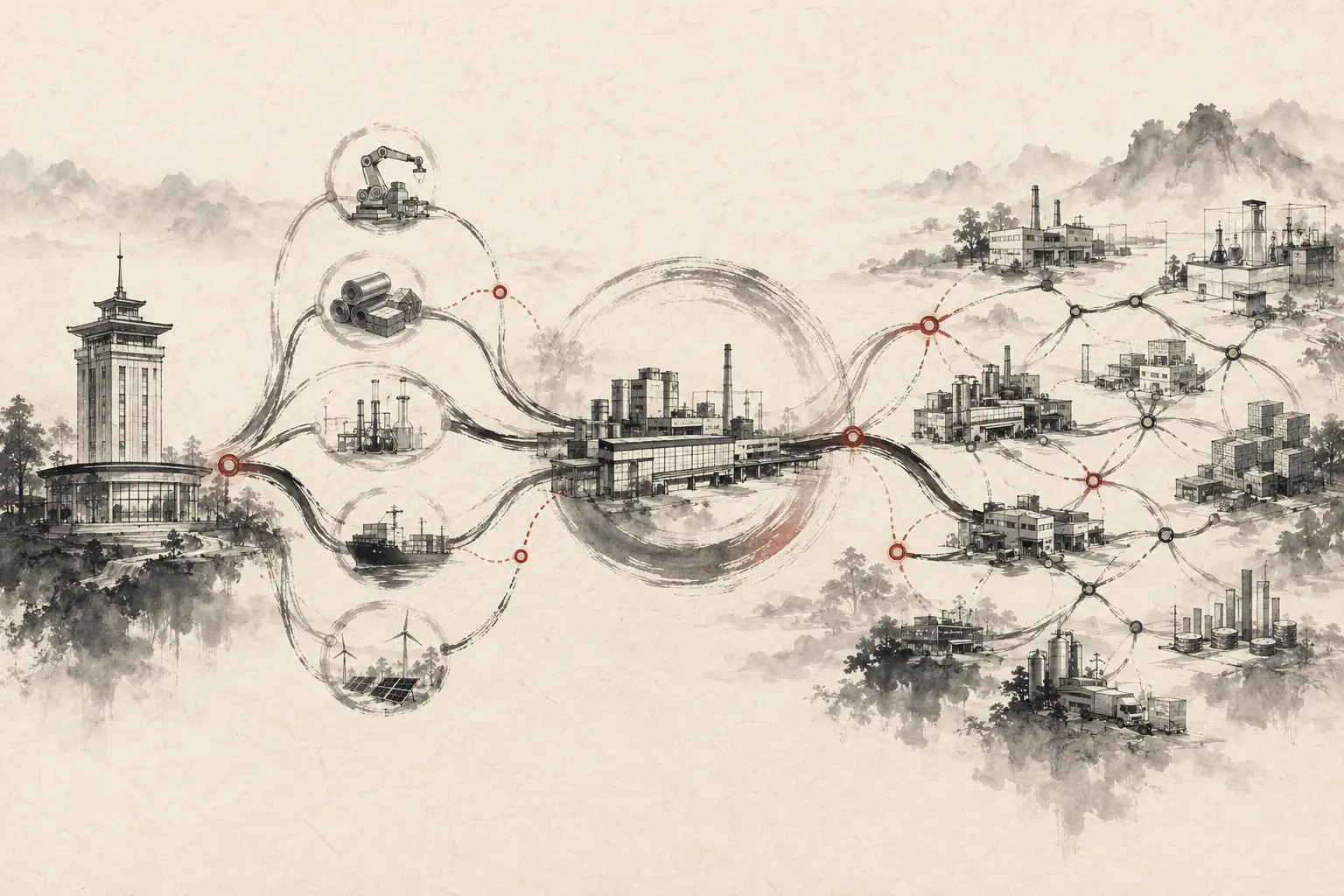
Modern ink-wash government coordinator, anchor enterprise and diverse suppliers moving an industrial chain

INFORMATION ASYMMETRY 35 · SUPPLY CHAIN · COORDINATION

链长制、链主企业、链创平台与产业集群

Who Serves as Chain Chief and Anchor Enterprise?

Separates local-government chain-chief coordination from anchor firms that organise suppliers through orders, technology and standards, while explaining contextual exceptions.

Cross-checked against Chinese primary, industry, research and media sources · August 3, 2026 · Currency basis: the latest CFETS rate available on August 3, 2026—USD/CNY 6.7894, published July 31, 2026 · monetary amounts shown only in U.S. dollars
Topic typeSupply-chain × policy-led

EDITORIAL THESIS

Core proposition

  1. 01

    In local-government systems, chain chiefs coordinate agencies and anchor enterprises organise suppliers through orders, technology and standards; other contexts may assign the same labels to central SOEs or research bodies.

Swipe sideways for detail; tap the graphic to open it full size.

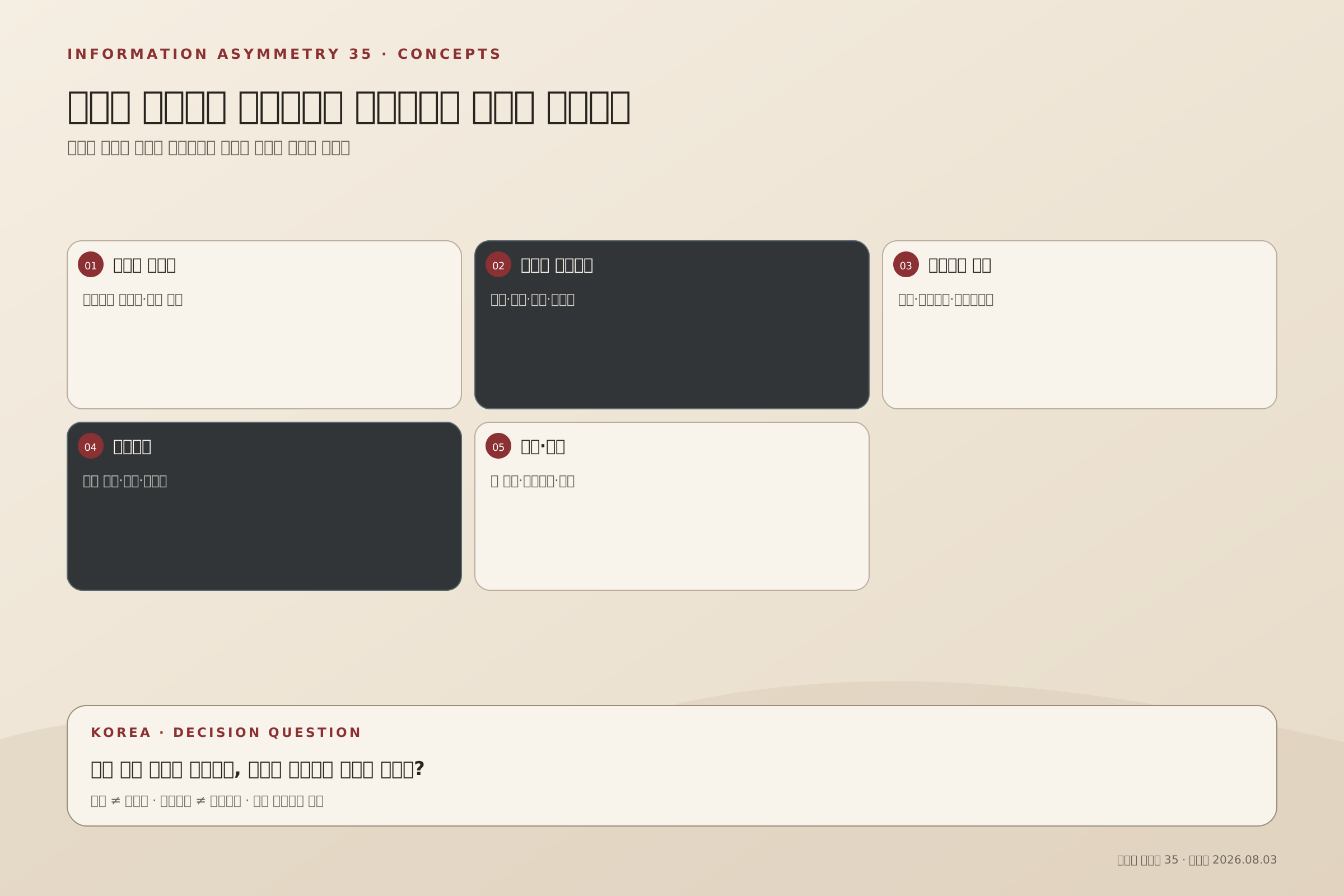
Infographic of the concept, operating structure, constraints and Korean response for Who Serves as Chain Chief and Anchor Enterprise?
35 · Operating structure — Who Serves as Chain Chief and Anchor Enterprise?A Korean-language graphic summarizing the concept, China’s operating system, constraints and Korea’s decision question.Download high-resolution SVG

CHINA SYSTEM · OPERATING LOGIC

Read the concept through its operating structure

01

The chain-chief system coordinates government

Chain-chief systems typically organise local-government powers around an industry chain, while other policy contexts may assign the same role to a central SOE.

02

Anchor firms organise the real supply chain

Anchor firms usually coordinate suppliers through orders, specifications, quality, data and delivery rules; some regions also allow research bodies or associations, so designation alone does not prove the role.

03

Innovation platforms and specialists connect capability

Some regions use chain-innovation platforms to connect research institutions and innovation centres to anchor-firm problems, while specialist SMEs fill narrow bottlenecks.

04

Policy can organise a chain but cannot replace demand

Matching, funds, subsidies, parks and joint R&D lower search costs but cannot replace anchor procurement budgets, validation, minimum orders, payment terms and switching rules.

05

Korea must choose its role in the chain

Korean firms should decide whether they are product competitors, critical suppliers, co-development partners or third-market partners, and verify real procurement evidence.

FIELD CHECK · BEFORE DECISION

Questions to verify before applying this concept

  1. 01

    Are the chain chief's identity, coordinating powers and tasks clear?

  2. 02

    Does the anchor hold real orders, specifications and supplier-switching power?

  3. 03

    Does R&D lead to validation, adoption and purchasing?

  4. 04

    Are output targets separated from contracts and cash flow?

Primary, industry, research and media sources

The Korean primary report cross-checks Chinese official texts with industry, research and media evidence.

01Official湖北省进一步深化制造业重点产业链链长制实施方案02Official国务院关于产业链供应链安全的规定(2026)03Official电子信息制造业2025—2026年稳增长行动方案04Official黄石市产业链供应链链长制实施方案(2026—2028年)
Back to Information Asymmetry